


How we teach women to recognize and respect their changing needs
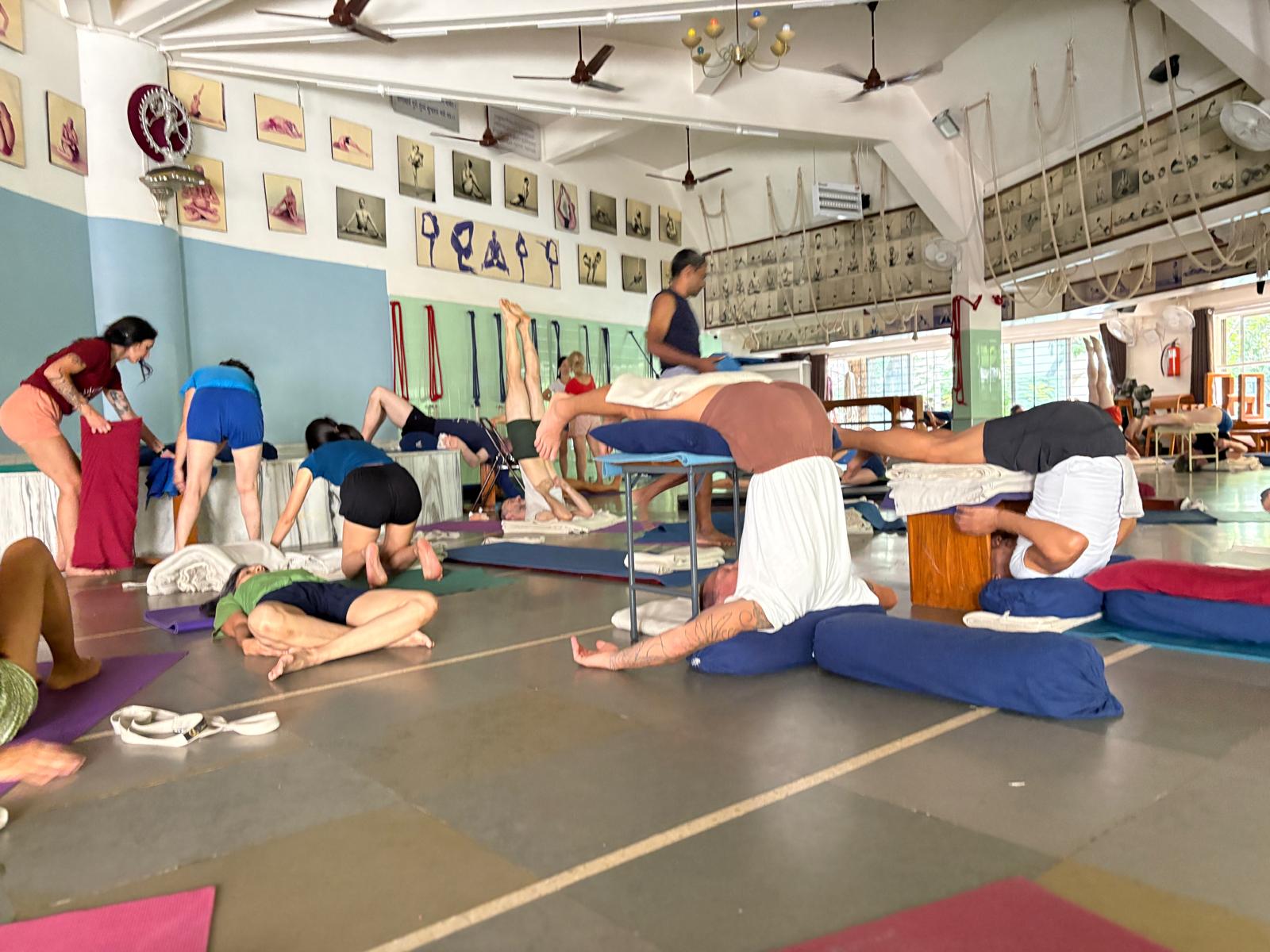
One of the most recognizable features of Iyengar Yoga is the use of props. B.K.S. Iyengar developed and refined an extensive range of props and methods for using them in the practice of asana. But why are props so important, especially during pregnancy?
Props serve several purposes. They provide support when someone has limitations in flexibility, strength, or stamina. They can bring awareness to a particular part of the body and help teach a specific action. They can also increase resistance or facilitate greater range of motion, helping practitioners develop strength and flexibility.
During pregnancy, props serve all these purposes, but often their most important function is to provide support.
Support Makes More Possible, Safely
As pregnancy progresses, a woman’s balance, strength, stamina, and range of motion may change. An asana that was comfortable a few weeks earlier may suddenly become difficult, and some asanas and actions should be avoided entirely.
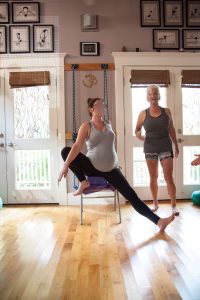
A knowledgeable teacher can employ props to adapt the practice to these changing circumstances. For example, balancing poses such as Ardha Chandrasana (Half Moon Pose) and Virabhadrasana III (Warrior III) can be practiced with support from a wall, chair, or other props when appropriate. This allows the student to work with the legs, hips, and spine without placing unnecessary strain on the joints or excessively engaging the abdominal muscles to maintain balance.
Props are also invaluable in restorative poses, where they support the body so that muscular effort can be eased and the practitioner can rest deeply. Supported restorative practice can promote comfort, relaxation, and ease of breathing.
The important point is that props don’t just make yoga easier. They allow us to change how an asana is experienced and what the practitioner learns from it.
 The Art of Instruction
Not every pregnant woman needs the same support, and not every woman benefits from the same sequence of asanas.
A student experiencing nausea or a headache may need a quieter, more restful practice than someone who arrives feeling energetic and wants to work actively. A woman with pelvic discomfort may need particular modifications to avoid aggravating her symptoms.
Iyengar Yoga teachers are trained to observe students carefully and adapt their teaching accordingly. We learn not only how to use props, but also how to modify the actions, emphasis, and purpose of an asana.
For example, if we are working to relieve a backache, we may emphasize the actions of the legs, hips, and spine rather than those of the arms and upper torso. A change in instruction can transform the experience of the pose.
This ability to customize instruction is fundamental to Iyengar Yoga. Pregnancy simply makes its importance especially apparent.
At Alcove Yoga, we aim to keep every student meaningfully involved in the class, even when someone needs to practice differently from the others. The objective is not for everyone to look alike in an asana, but for each person to benefit from the practice.
Self-Acceptance and Self-Confidence
Something interesting happens when individualized instruction becomes the norm in a yoga class.
As trust develops between teacher and student, women become comfortable accepting modifications. They see that another student may be practicing differently, and that this is perfectly appropriate. Nobody is being singled out for failing to perform an asana correctly.
Over time, this cultivates an attitude of self-acceptance. For a pregnant woman, this can be a tremendous relief.
Pregnancy brings changes that are not always easy to accommodate. A woman may find herself needing more breaks at work, declining activities she once enjoyed, or feeling frustrated that her body no longer looks or responds as it did before pregnancy.
There can be considerable pressure to continue functioning as though nothing has changed. But pregnancy is a time when it is particularly important to acknowledge one’s needs and respond to them intelligently.
In our Pregnancy Yoga class, a woman learns that adapting her practice is not a sign of weakness or inadequacy. It is an expression of awareness and good judgment. She learns to recognize when she needs to work, when she needs support, and when she needs to rest.
As she experiences the benefits of making these decisions, she develops greater confidence in her own judgment. This growing sense of self-trust can serve her well beyond the yoga classroom.
Benefits Beyond Pregnancy
After childbirth, attention naturally turns toward the newborn. The demands of caring for a baby can make it difficult for a new mother to recognize, much less attend to, her own needs.
The self-awareness cultivated through yoga can help her find a balance between caring for her child and caring for herself. She has learned to look inward, recognize what she needs, and respond with greater clarity and confidence.
This is why Iyengar Yoga during pregnancy is about much more than props, stretching, or physical exercise. The teacher provides guidance, has the experience to know when and how to employ props. Our classes teach women something they can carry into motherhood and beyond: the ability to recognize their own needs and respond with intelligence, confidence, and care.
At Alcove Yoga in Houston Heights, our pregnancy yoga classes offer individualized instruction in small groups, with careful attention to each woman’s changing needs. Whether you are new to yoga or have practiced for years, we welcome you to explore how Iyengar Yoga can support you during pregnancy.