


Pauline Schloesser, Ph.D., Certified Iyengar Yoga Teacher, IAYT Yoga Therapist
Introducing the Alcove Yoga Studies and Teacher Education Program
There is an important difference between attending yoga classes and undertaking a sustained study of yoga. Regular classes provide an essential foundation, but yoga is a vast subject that extends far beyond the practice of postures.
What Do We Mean by Yoga?
In Iyengar Yoga, we study classical yoga, rooted in the eight-limbed tradition of Patañjali’s Yoga Sūtras. In this classical system, āsana, or postures, constitutes only the third of eight limbs. The eight limbs are:
- Yama: Universal moral vows of nonviolence, truthfulness, non-stealing, continence, and non-greed.
- Niyama: Personal observances for spiritual development, including cleanliness, contentment, austerity, study of sacred texts, and surrender to God.
- Āsana: Postures.
- Prāṇāyāma: Regulation of the life force through the breath.
- Pratyāhāra: Withdrawal of the senses from external objects.
- Dhāraṇā: Concentration.
- Dhyāna: Sustained concentration, or meditation.
- Samādhi: Complete absorption in the object of meditation.
Yoga, as Guruji B.K.S. Iyengar has said, is “meditation in action.” Most yoga students are familiar with āsana and may have been introduced to prāṇāyāma, but few understand that yoga is samādhi, a profound state of meditative absorption.
In Yoga Sūtra II.28, Patañjali describes the practice of the limbs of yoga as a process through which impurities are destroyed and the light of wisdom arises. Thus, the eight limbs are not simply a collection of techniques or practices. Together, they constitute a path of purification and the acquisition of wisdom.
That is what we mean by yoga.
What Does It Mean to Study Yoga?
Studying yoga involves something more than attending classes regularly.
In fact, real yoga does not happen in a classroom. At best, the classroom is a place where we learn techniques that we can later practice on our own.
Yoga is an internal state in which body, mind, and breath become interconnected and interwoven, taking us beyond the egoistic sense of “I.” While we need a functional sense of self to navigate the external world and our relationships with others, identification with this “I” becomes an obstacle to the yogic state, which is described by Patañjali as citta-vṛtti-nirodhaḥ, or the complete cessation of thoughts.
When our attention is directed toward people and objects outside ourselves, we are no longer in that state of inward absorption. This includes the activity of listening to a teacher, following instructions, and thinking as well.
The classroom is therefore essential to learning yoga, but learning yoga and experiencing yoga are not the same thing. We learn from our teachers, but it is through our own independent practice that we begin to internalize what we have learned.
Sustained study also requires inquiry. We must ask questions about what we are doing, why we are doing it, and how our practice relates to the way we live. This is where the philosophical teachings of yoga become indispensable.
Why I Am Offering This Program Now
Over the years, I have had the privilege of working with many dedicated students at Alcove Yoga. As I look toward the next chapter of my life, I have been thinking more deeply about what it means to transmit the knowledge and experience I have received from my own teachers.
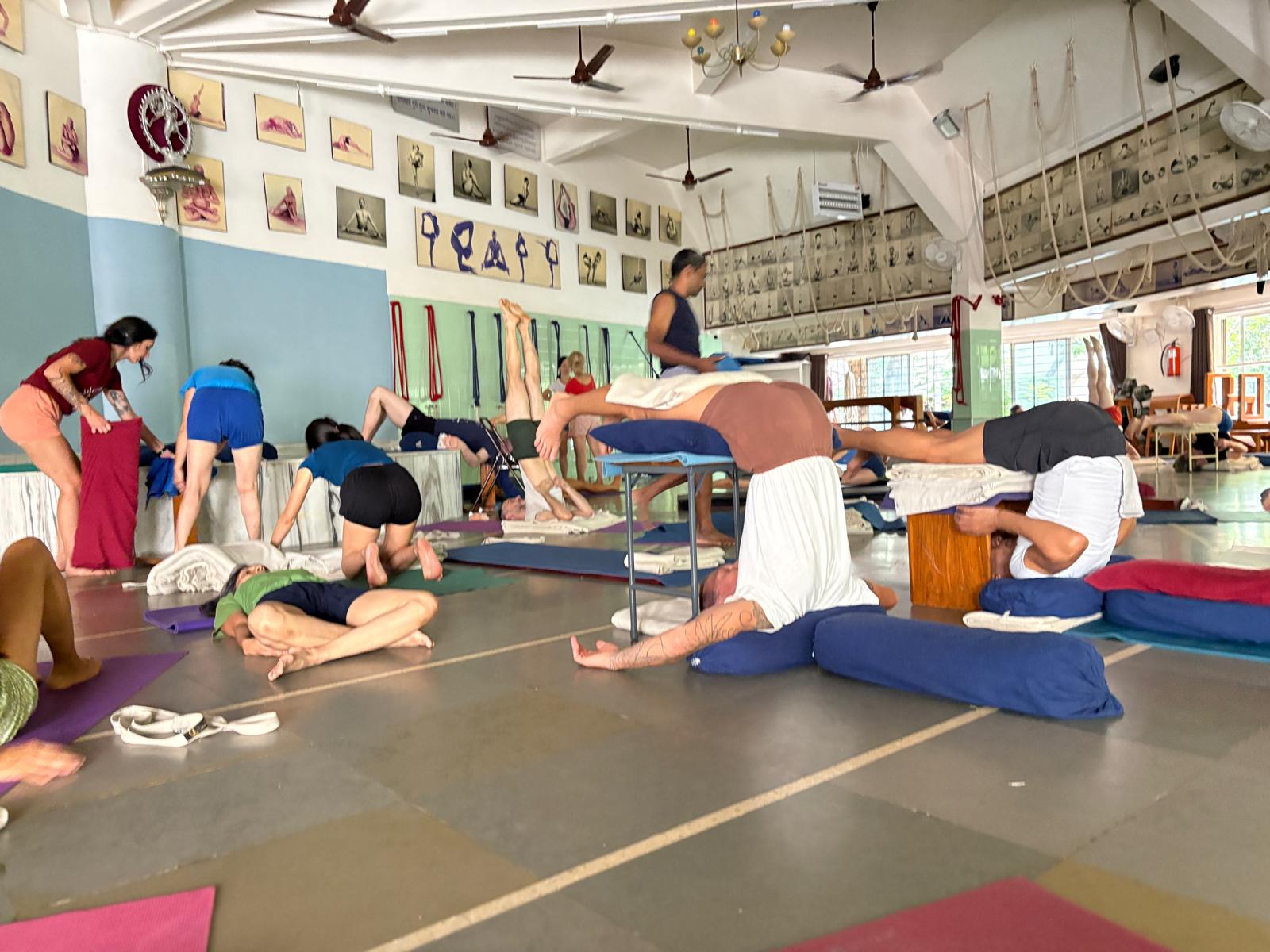
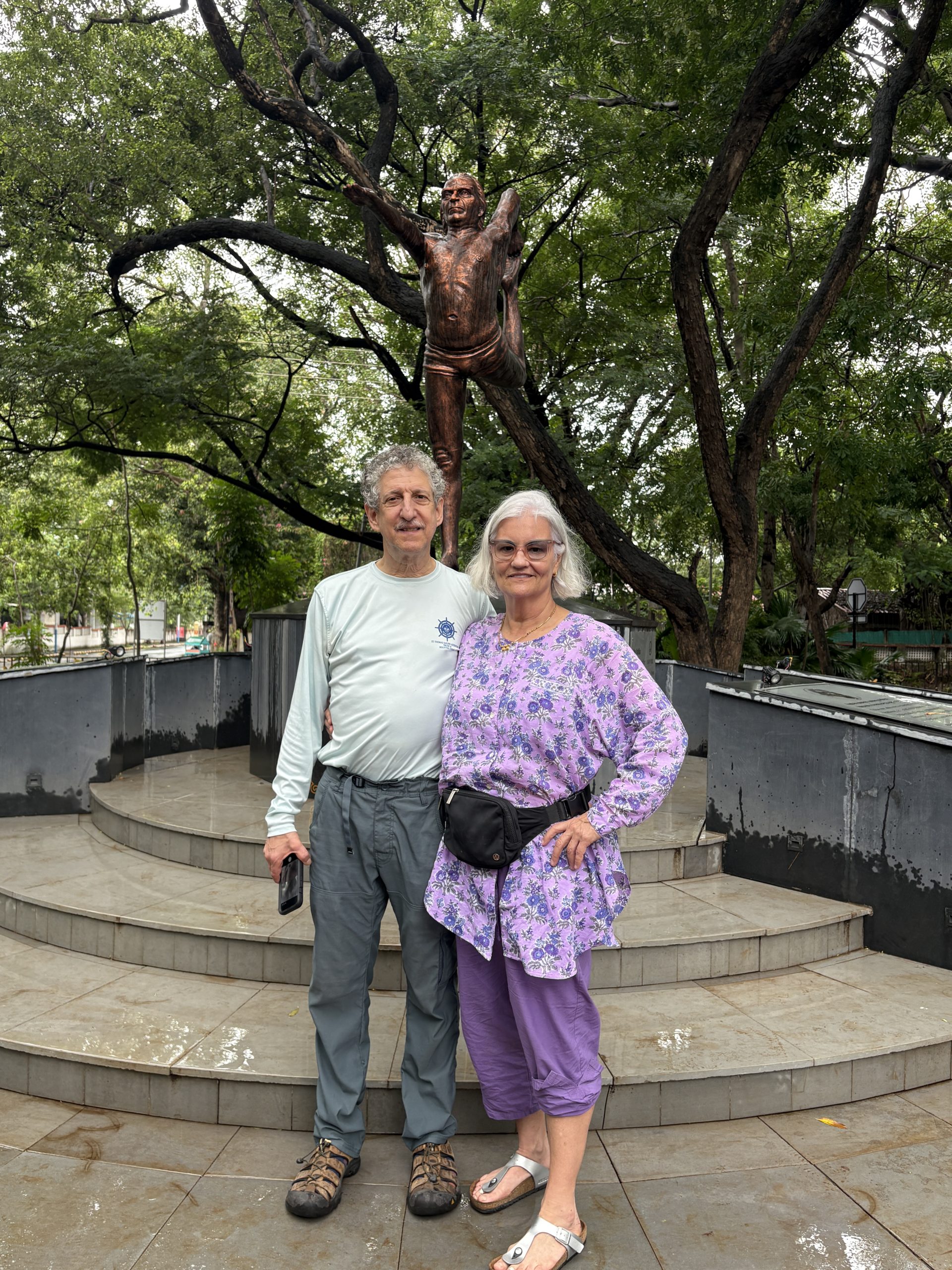
My three months of study in Pune during the summer of 2026 involved a grueling schedule and intense experiences, both in the classroom and in my own practice. I relished the opportunity to deepen my practical knowledge of manual adjustments, therapeutic applications of āsana, and teaching students with widely varying abilities. But some of the most valuable lessons came from private conversations with Abhijata, Prashant, and Raya.
During one meeting, Prashant told me emphatically, “You’ll have to be responsible! It’s a big responsibility! You’ll have to accept the people that come to you. And you cannot get perturbed!”
His words struck me. Although I had been shouldering the responsibilities of running a yoga studio for many years, he was speaking about another kind of responsibility: the ability to remain composed and accepting in the face of students’ difficulties, limitations, and mistakes. I recognized how often I had allowed frustration to interfere with my teaching. Since returning from Pune, I have become much more aware of the impulse to criticize and have made a conscious effort to remain calm and unperturbed.
Another memorable exchange took place with Abhijata, who had asked me to begin practicing supported backbends for at least six minutes. When I told her how powerful I found this new way of working, she questioned me about why it was different.
“It’s adhyatmic,” I said.
“What do you mean by that?” she tested.
“It’s about being,” I replied. “Self-realization.”
“See, this is what I like. You get it,” she said.
These exchanges reminded me how much my understanding of yoga has changed over the years. When I began teacher training more than twenty years ago, I was determined to achieve, improve, and prove myself. The ego was very much in the driver’s seat. Now I understand more deeply that yoga is not ultimately about achievement or recognition. It is about learning to be, to accept reality without the constant interference of the ego.
This is the kind of transformation that sustained study and practice can bring about. And it is something I would like to share with my students.
I have also been encouraged by RIMYI, the Ramamani Iyengar Memorial Yoga Institute in Pune, to develop teachers and strengthen our local Iyengar Yoga community.
As many of you know, I expect to leave Houston in the next few years. This has given me a renewed sense of purpose in developing a community of serious students and future teachers who can continue to sustain Iyengar Yoga here.
I would like to share more of what I have learned over the years and create an opportunity for students to undertake a more sustained and comprehensive study of yoga than is possible in our regular weekly classes.
This is the purpose of the Alcove Yoga Studies and Teacher Education Program.
What We Will Study
The program will meet for a total of ten hours, one weekend per month, over six months, beginning in December 2026. Between our monthly meetings, students will be expected to continue attending regular classes, maintain a personal practice, and complete reading and occasional writing assignments.
Our studies will encompass several interconnected areas.
Sacred Texts and Self-Inquiry
Students will be introduced to the sacred texts of yoga, including the Upaniṣads, the Bhagavad Gītā, and the Yoga Sūtras of Patañjali.
These texts provide the philosophical, ethical, and spiritual foundations of yoga. They address fundamental questions about the nature of the self, the causes of suffering, the relationship between action and knowledge, and the possibility of liberation.
They help us understand how to lead a life that is free from suffering.
Personal freedom from suffering means that we are no longer mentally tormented by things that happened in the past or things that might happen in the future. But it requires us to examine our own habits, attachments, reactions, and relationships, and to recognize those activities and associations that may not serve the purpose of inner peace.
In Yoga Studies, all students will be asked to write at least one personal essay involving self-inquiry into the obstacles they encounter on the path of yoga.
Āsana and Prāṇāyāma
The weekends will include instruction in āsana and prāṇāyāma, where we learn techniques that help remove impurities of the body and mind, cultivating a state in which the mind becomes quiet, clear, and receptive.
The practice of āsana prepares the body to sit erect and still for extended periods, making it possible to advance through prāṇāyāma toward meditation. Through sustained practice, we begin to understand how body, breath, senses, and mind are related, and how their integration supports the inward journey.
Our work will involve not only the practice of āsana and prāṇāyāma but also the study of sequencing, observation, and adaptations for common ailments.
Chanting and Mantra
Chanting and japa, or the repetition of mantra, will also be introduced and taught. Here again, the transformative power of these practices is realized through personal practice at home.
In our group sessions, students will become acquainted with the vibrations of sound within the body and explore how chanting and mantra can help draw the mind toward a meditative state.
The Art of Teaching
Those who are interested in becoming teachers, or who would simply like to explore the possibility, will have opportunities for peer teaching.
This will take place in a supportive environment with their peers, with guidance from me appropriate to each student’s level of experience.
For example, someone entirely new to teaching might stand alongside me while I teach one side of an āsana, offering a few instructional points. The student would then repeat those points while teaching the other side.
Someone who is already a CIYT (Certified Iyengar Yoga Teacher), on the other hand, might teach independently, receiving my observations and comments after completing the teaching.
There are many ways to guide and support developing teachers, and I will do my best to make the process friendly, constructive, and helpful.
Must I Want to Become a Teacher?
Absolutely not.
One of my principal aims is to offer serious students an opportunity to deepen their understanding of yoga without necessarily pursuing certification.
Learning to observe more intelligently, developing a meaningful home practice, studying philosophical texts, and cultivating greater self-awareness are valuable in their own right.
Students who do not wish to teach will also play an important role in supporting those who do, participating in demonstrations, partner work, and peer-teaching exercises.
I hope to bring together a group of students who are committed to learning, practicing, and exploring the deeper dimensions of yoga, regardless of whether teaching is part of their future.
Teacher Education and Certification
Completing the Alcove Yoga Studies and Teacher Education Program does not confer certification in Iyengar Yoga.
In our system, the education and development of a teacher are distinct from the independent assessment of a candidate for certification.
Students interested in pursuing Iyengar Yoga certification must meet the requirements established by IYNAUS, including appropriate class and teaching experience, a relationship with a qualified mentor, IYNAUS membership, and successful completion of an assessment.
Those interested in pursuing this path will find the program a valuable foundation for their development as teachers. Mentoring may also be available to students who wish to pursue certification.
More information about the certification process can be found on the IYNAUS website.
An Invitation to Deeper Study
The study of yoga is a lifelong undertaking. There is no point when we can say we’ve learned enough. As our practice matures, our understandings change, and questions arise that we could not even have imagined when we first began.
My hope is that this six-month program will strengthen our community of students. There is something wonderful and unique about sharing this experience with people whom we may previously have seen only in class and spoken to briefly. The study of yoga leads to personal transformation, and it is deeply rewarding to be in the company of others who are also seeking the truth.
Whether or not participants eventually become teachers, I am confident that the program will help them develop a deeper relationship with yoga and a greater capacity to bring new perspectives into their everyday living.
The Alcove Yoga Studies and Teacher Education Program begins in December 2026 and continues through May 2027. It is open to students with at least two years of experience in Iyengar Yoga who are ready to undertake a more sustained and serious course of study.
I invite those who feel ready for this next stage of learning to join us.