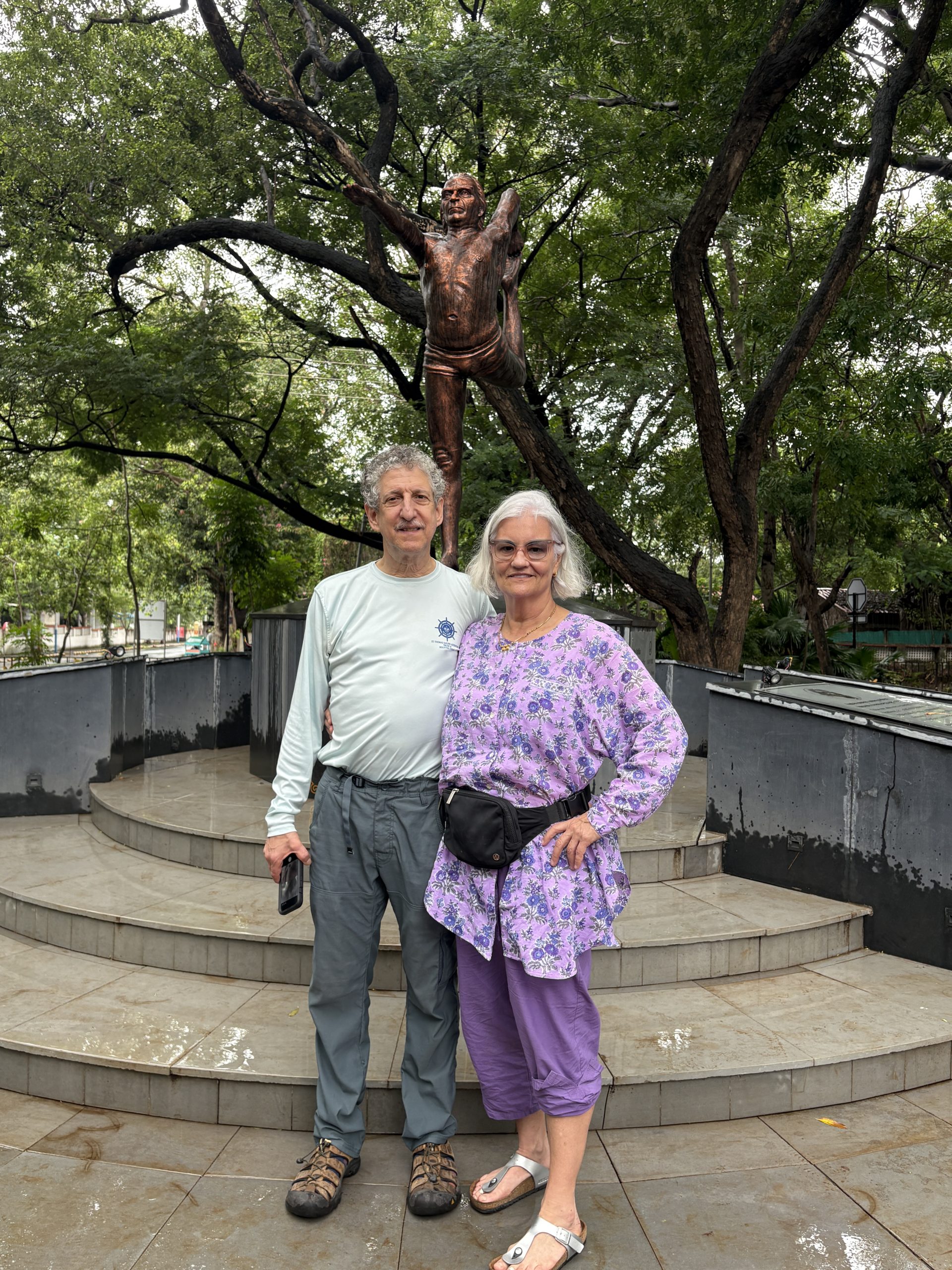


This is not my first stay in Pune to study at RIMYI, but it is my first time remaining for more than a month. Because I am here for three months, I have greater access to the Iyengars and the other RIMYI teachers, along with more opportunities to assist in classes.
I have met individually with both Prashant and Abhijata. Abhijata was interested in my background: what I did before yoga, how I came to yoga, how long I have been teaching, what kinds of classes I teach, and why I am here now for three months. It feels wonderful to be seen and heard, and to be invited into the process.
When Abhijata became Director of RIMYI, she revamped the old certification system. The former system had 12 levels; the new one has 4. Most of the older students who worked directly with Guruji and Geetaji were converted to Level 4, but RIMYI has not yet held an assessment for the new Level 4. I am among the first students to go through this new process. Two more applicants from Mexico are expected next month. Since the structure is still emerging, Abhijata said we would see how it unfolds—and she hoped I did not mind being the guinea pig. I told her I did not.
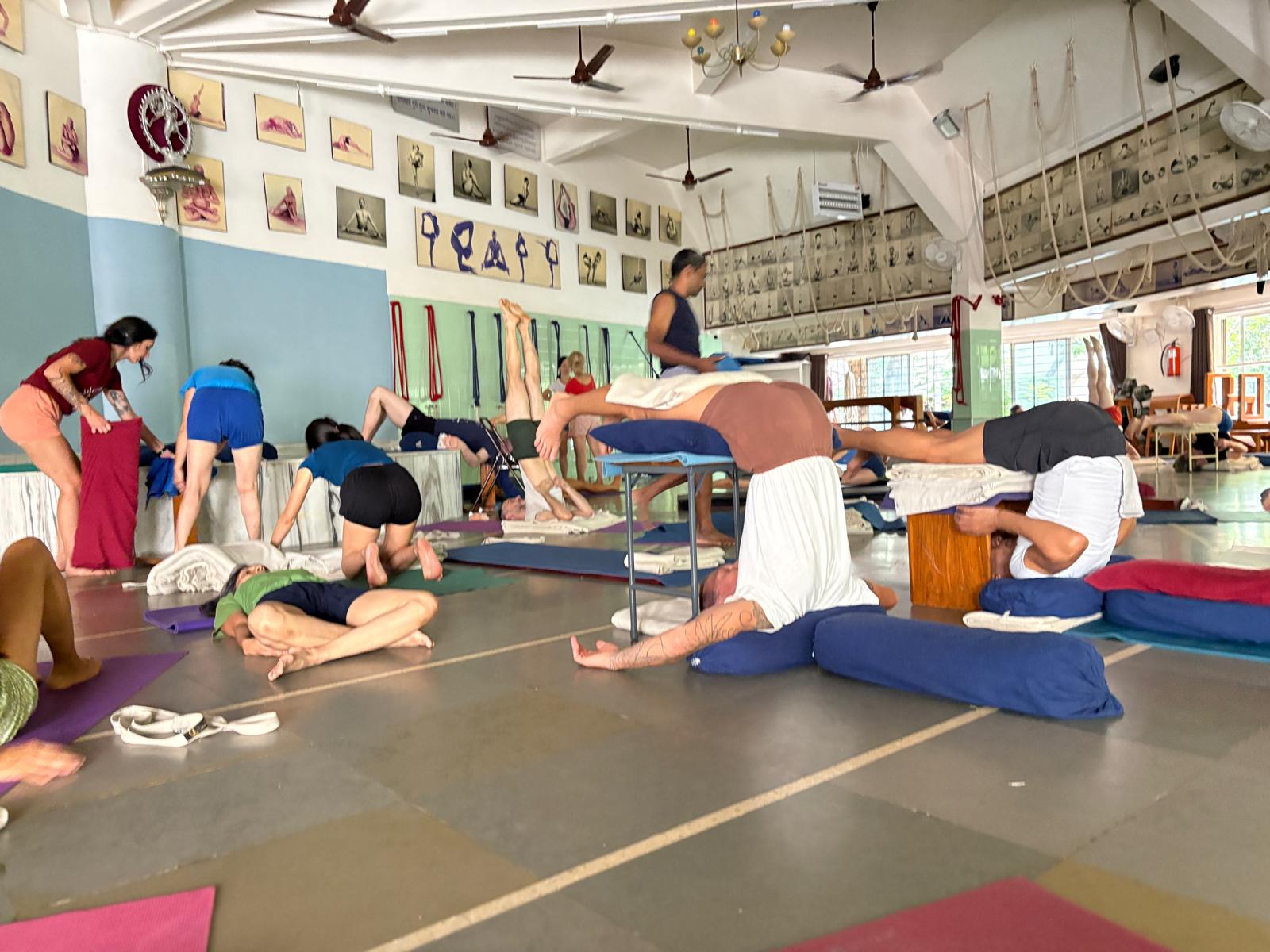
Aside from requiring four essays on yoga philosophy, which I submitted last February, RIMYI has not yet created a formal structure for assessing new candidates. Abhijata wants me to assist in two therapy classes each week, as well as in two Intermediate classes—hers and Raya’s. So this week, in addition to attending class daily as a student, practicing in the hall, and observing two classes, I assisted in four classes.
What does it mean to assist in class? In therapy, or remedial, class, it can mean anything from gathering and setting up props, to adjusting a student’s body with your hands or a rope, to giving instructions for the asanas. Each student has an individual sequence, and each gathers their own props for each asana unless they are unable to do so. This builds involvement and independence. Visiting students are not privy to the ailments of remedial students. However, an experienced teacher can often discern a student’s condition by watching them practice or by looking at their written sequence. It is not appropriate to ask what the problem is if you are observing, but if you are working directly with students, they will often tell you.
As you can imagine, we are watched constantly. There are many senior teachers at RIMYI, but the leaders are Abhijata Iyengar and Raya Uma Datta. They offer corrections or help whenever they want us to do something differently. I have learned many therapeutic techniques in therapy intensives with my mentor in the US, but it is difficult to absorb everything in a one-week intensive. Attending therapy class at RIMYI twice a week over one or more months offers a friendlier pace and allows for deeper absorption of what we see and experience. So far, I have worked with people who have low back pain, neck and shoulder pain, and heart issues.
Assisting in Intermediate classes is different. Abhijata introduced me to one of the senior teacher assistants, explained that I would be staying for three months, and asked her to help me learn how to assist the students.
Imagine a packed hall of about 100 students with four assistants. Each of us stayed in one section of the room and watched for anyone who needed help. Abhi instructed the students to take Ardha Candrāsana. Some had difficulty balancing, so they stuck their buttocks out behind them and hunched their shoulders forward, closing the pelvis and letting the top leg hang. Pracchi, the senior teacher helping me, saw that I did not understand how to help in this pose. She had me take the pose right then and gave me an adjustment. From that experience, I learned to stand behind the student, place the side of my hip into their buttock, use one hand to pull back on the lifted-leg thigh and the other to pull back on the top shoulder—all while pushing the buttocks forward. This creates an intense opening of the chest and pelvis without the loss of balance.
So far, every aspect of being here has been interesting and rewarding. Truth be told, though, the intensity of the schedule at RIMYI is exhausting. There is very little time for shopping or sightseeing. My apartment is 1 km from the Institute, and I try to limit my walking to 2 km per day, taking a rickshaw when I can.
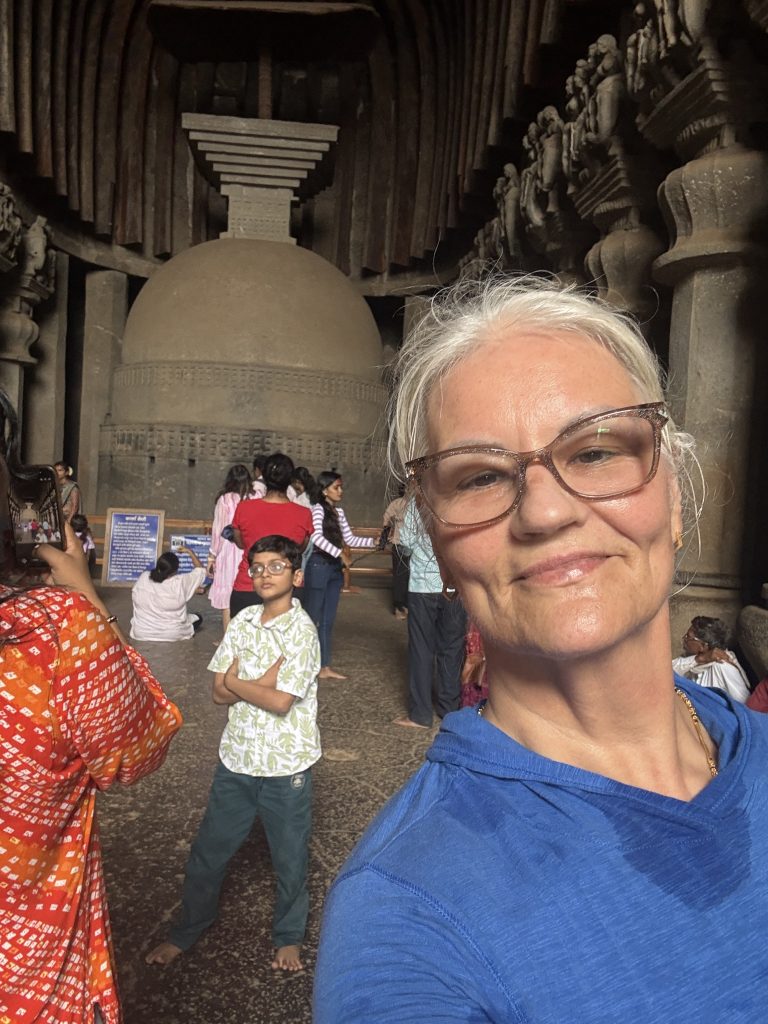
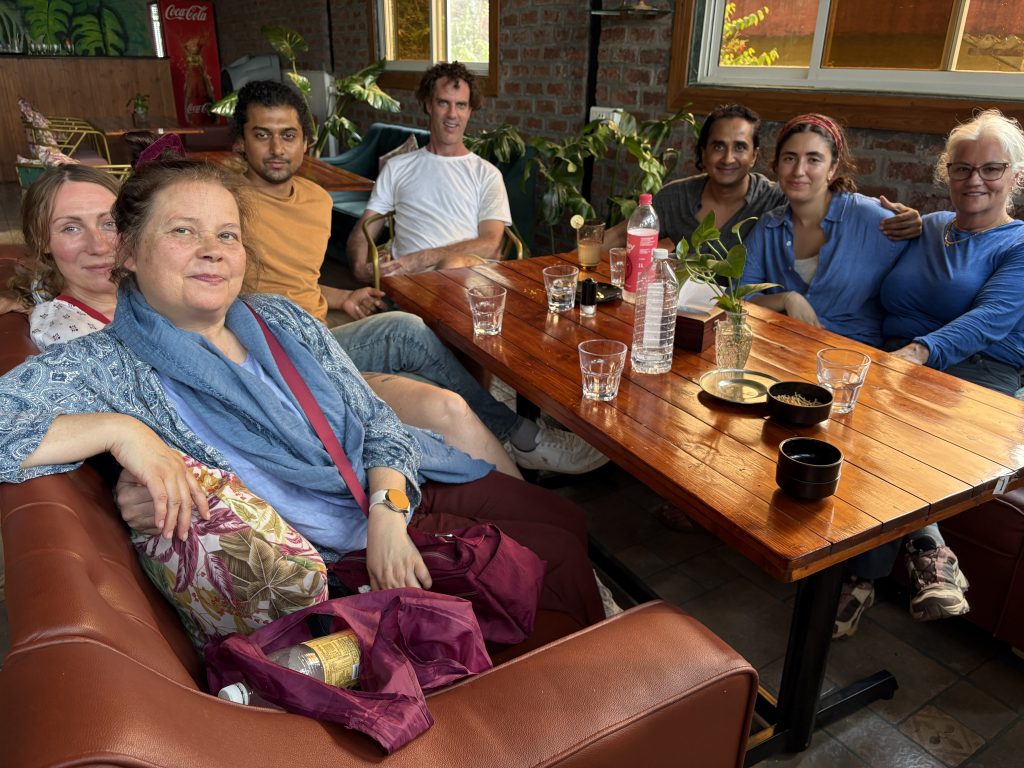
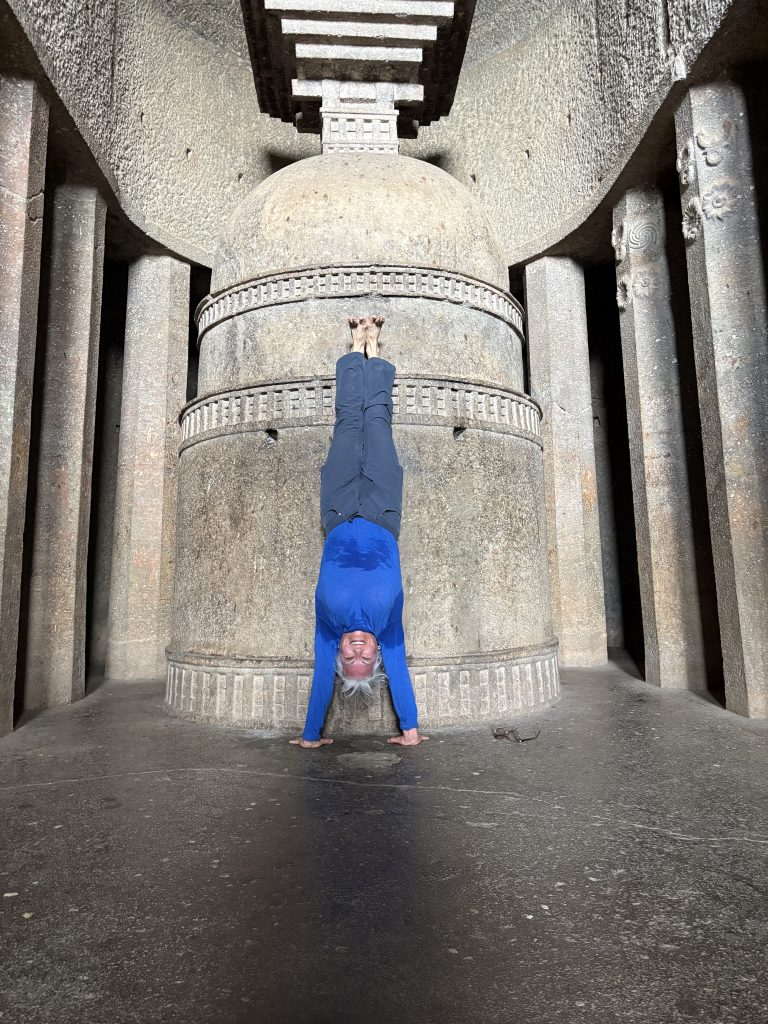
On Sunday, I went with a group of visiting students to tour some ancient Buddhist caves. We saw the Bedse Buddhist Caves, dating back to 200 BC, and the Karla Caves, from the first century CE. It is a wonder to imagine the workmanship that went into hand-carving these spaces so long ago. Because it was a long day of touring, it also gave those of us in the group a chance to get to know one another better. Our nationalities included Finland, Australia, Israel, the US, India, and Belarus/Netherlands.
This Week’s Suggested Practice: Backward Extensions
Things to remember: Go slowly and observe the breath. Move beyond physical culture and watch how breath and body feed each other. Notice the mindset that emerges while you are in the asana. Then let the asana unfold so the mind remains neutral—neither intoxicated with excitement nor caught in dread and agony. Be curious about sensations and perceptions. Watch the mind.
- Do 2 or 3 different standing asanas that emphasize the back and spine. For example, if you do Utthita Trikoṇāsana, focus on the actions of the arms and legs that create movement of the spine from back to front, as well as elongation and extension.
- Prepare for Śīrṣāsana or an alternate āsana. To prepare for Śīrṣāsana, practice a few asanas that get the trunk moving down.
- Śīrṣāsana or Dvi Pada Viparīta Daṇḍāsana
- Prepare for backward extensions. Supta Vīrāsana helps open the front of the thigh and hip, and Pūrvottānāsana opens the chest. (Rope 1 is also called Pūrvottānāsana here.) Think in this manner and make your choices.
- Go for Uṣṭrāsana, the camel pose. If you are prone to back pain or are menstruating, put your hands on the wall and pull downward with the arms as you curve your back and take the head back. Gradually approach your heels with your hands, maintaining the lift of the back and front chest. Make at least 3 attempts.
- Do some form of twisting asana. There are many to choose from; you decide.
- Do some form of Shoulder Balance (Sālamba Sarvāṅgāsana, Chair Sarvāṅgāsana, Setu Bandha, or Ardha Halāsana).
- Rest in Savasana or bent-leg Savasana.