

Pauline Schloesser, Ph.D., Certified Iyengar Yoga Teacher, IAYT Yoga Therapist
Last week I wrote about my experiences at RIMYI, and I’d love to hear how the recommended practice landed for you. If you tried it, please share what you noticed—what worked, what surprised you, or what you found difficult.
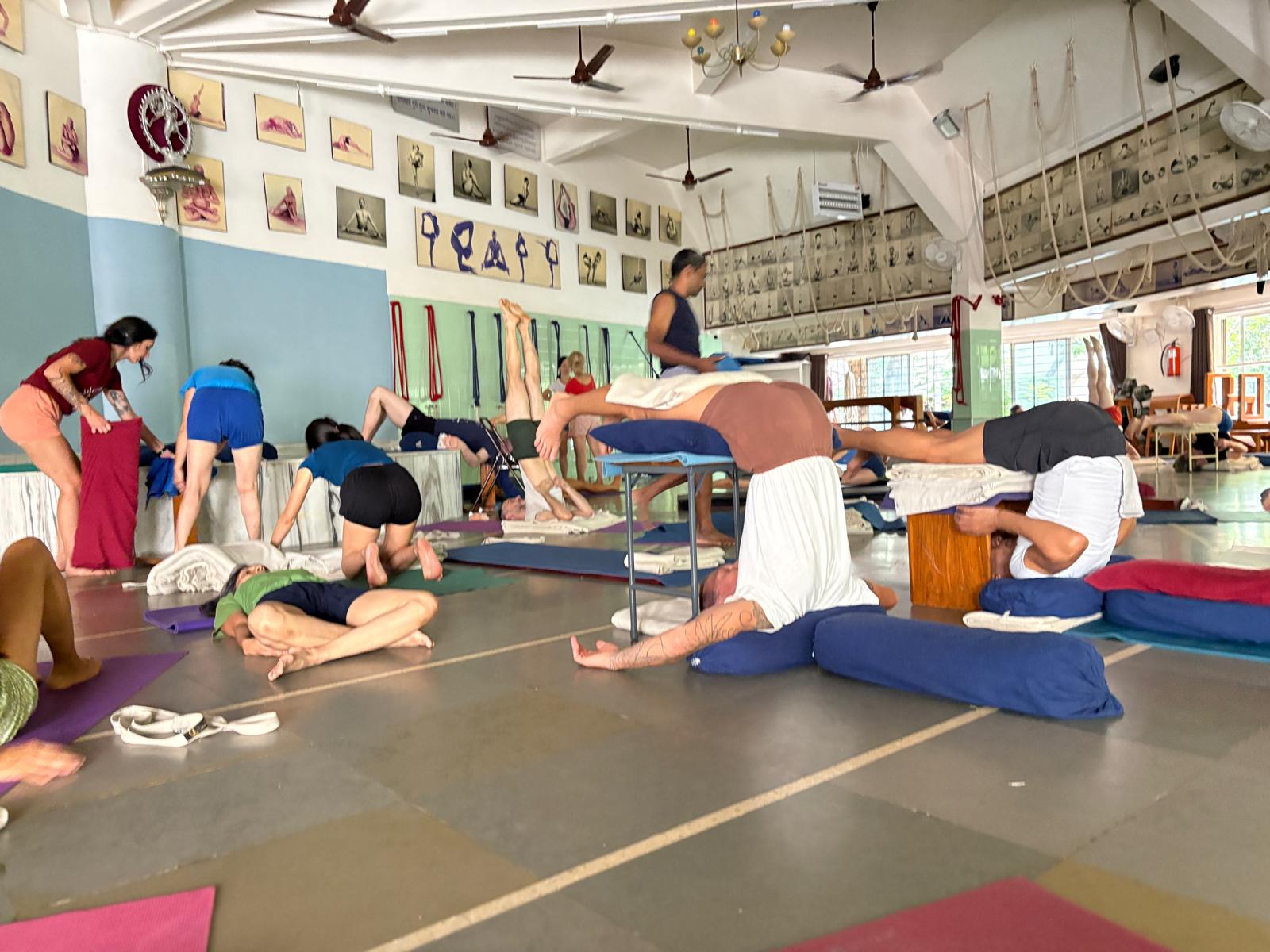
As June comes to a close, many of the visiting students I’ve gotten to know are packing up and heading home. There is a feeling of fullness in the air. Everyone seems a bit exhausted after a month here. As one fellow American said to me, “I’ve had the best time, and my cup is full to the brim. I am completely saturated and don’t think I can take any more.” She was looking forward to going home to rest and digest all she had taken in.
For me, the month feels less like a sprint and more like a marathon. I’ve been advised to conserve my energy, especially after some lightheadedness the previous week, probably from dehydration. Then the rains came last weekend, cooling everything down and clearing the air. Summer is over; monsoon season has begun.
This was also a week for practical matters, including healthcare. I have some orthopedic issues in my left foot and right knee, so I got a referral to a doctor at a local hospital. I waited an hour and 20 minutes, saw the doctor for about 10 minutes, and paid 1,000 INR—about $11. I left with diagnoses and prescriptions for an anti-inflammatory, ice packs, a shoe insert, and a collagen supplement.
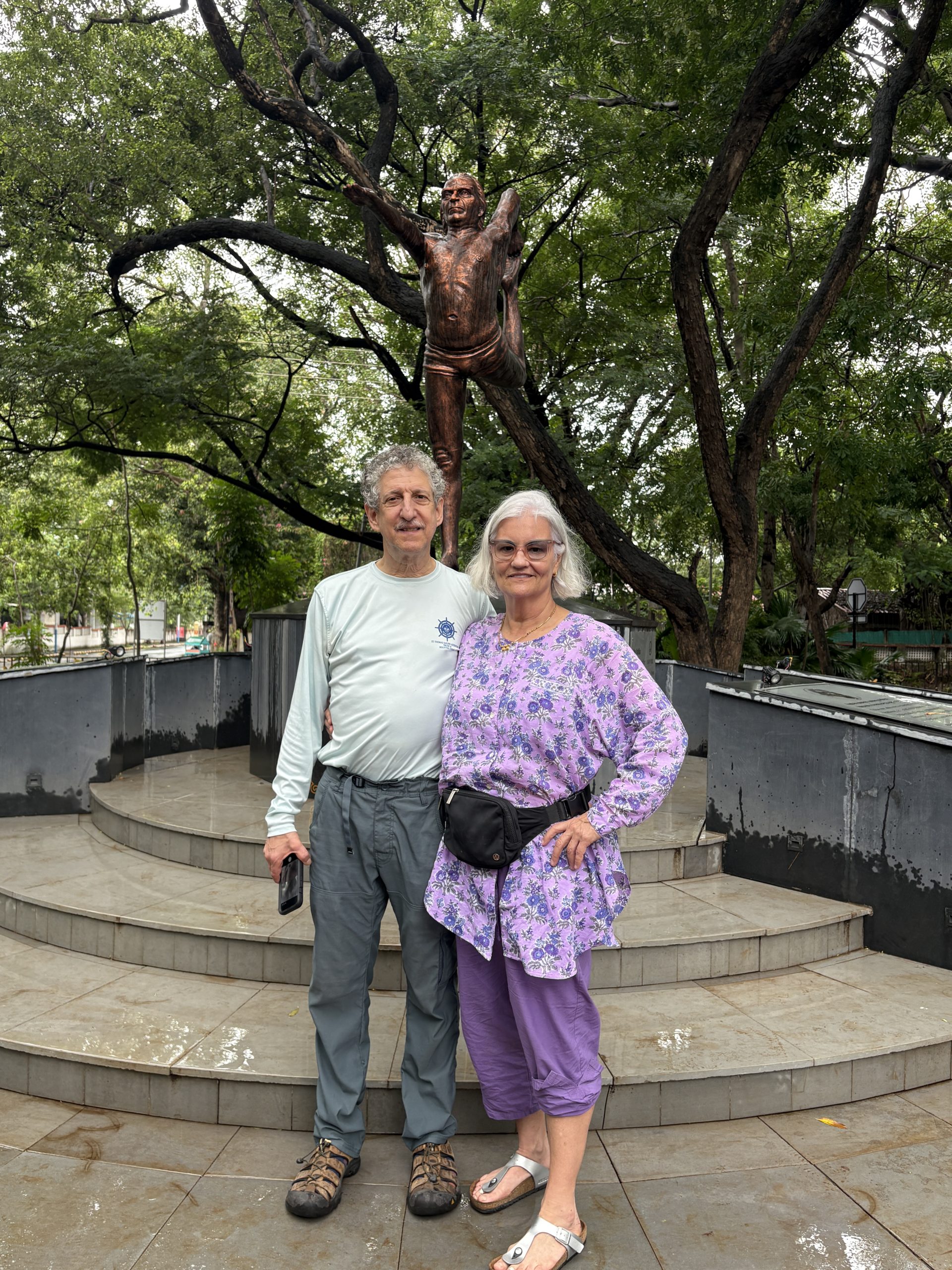
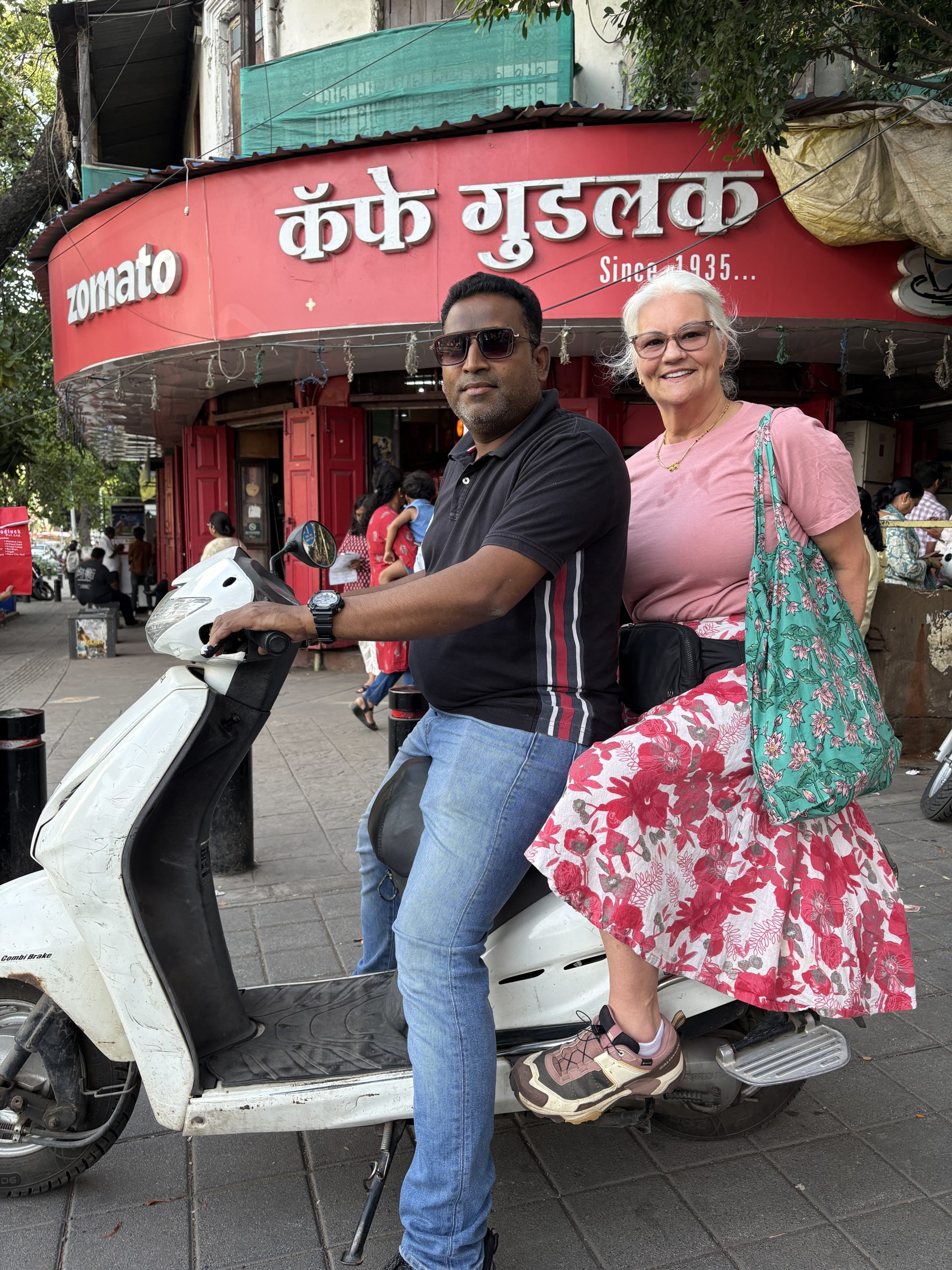
I also visited the optometrist/optician. Here in India, the same person can perform the eye exam, write the prescription, fit you for specs, and order the lenses. They also don’t insist that you buy new frames if you only need new lenses. I brought old frames with me and am having new lenses made for them. My progressive lenses with transition darkening will cost $165; single-vision lenses will be about $38. After the appointment, the doctor took me for chai, and I rode on the back of his scooter. Only in India. See the photo.
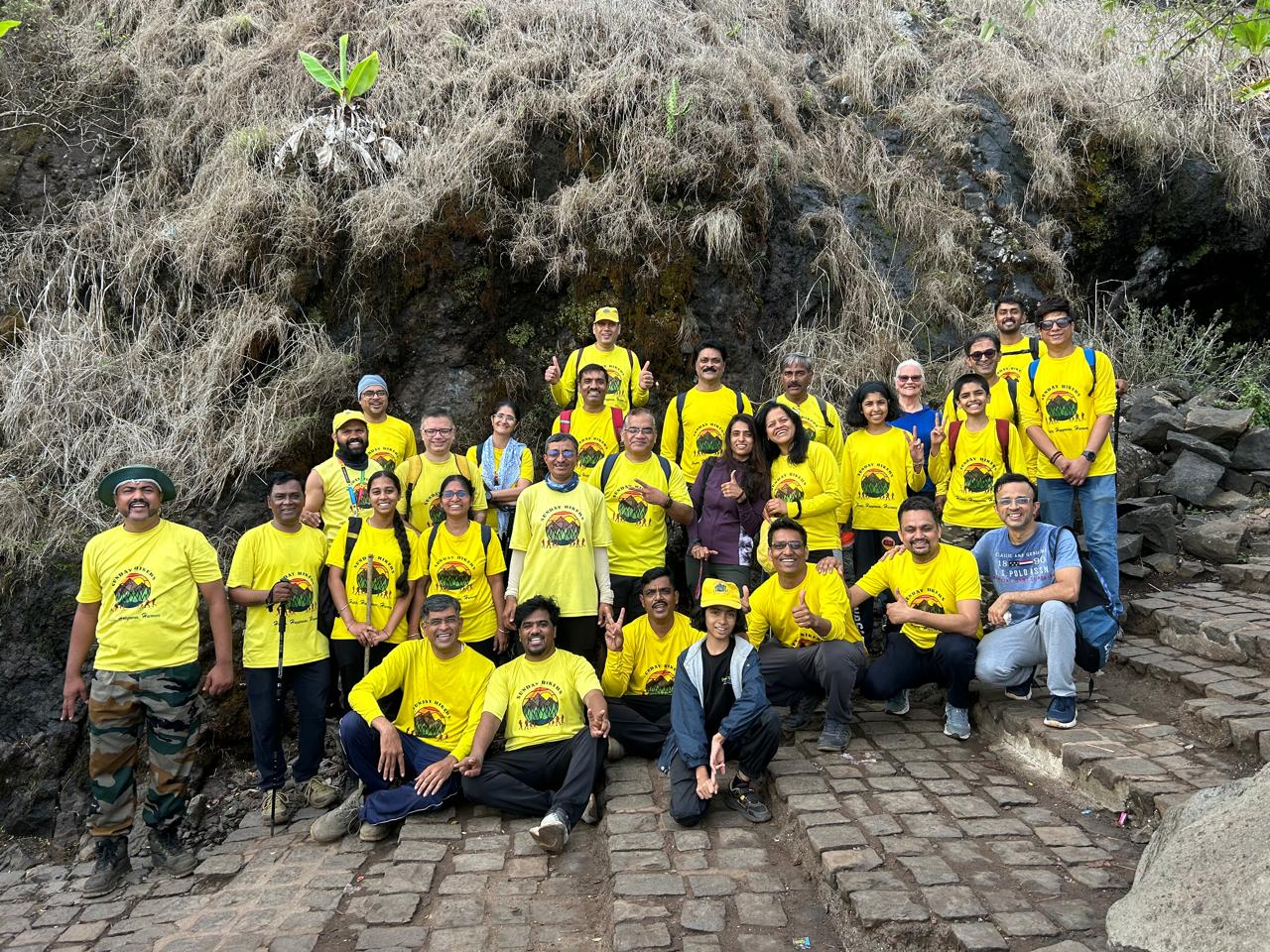
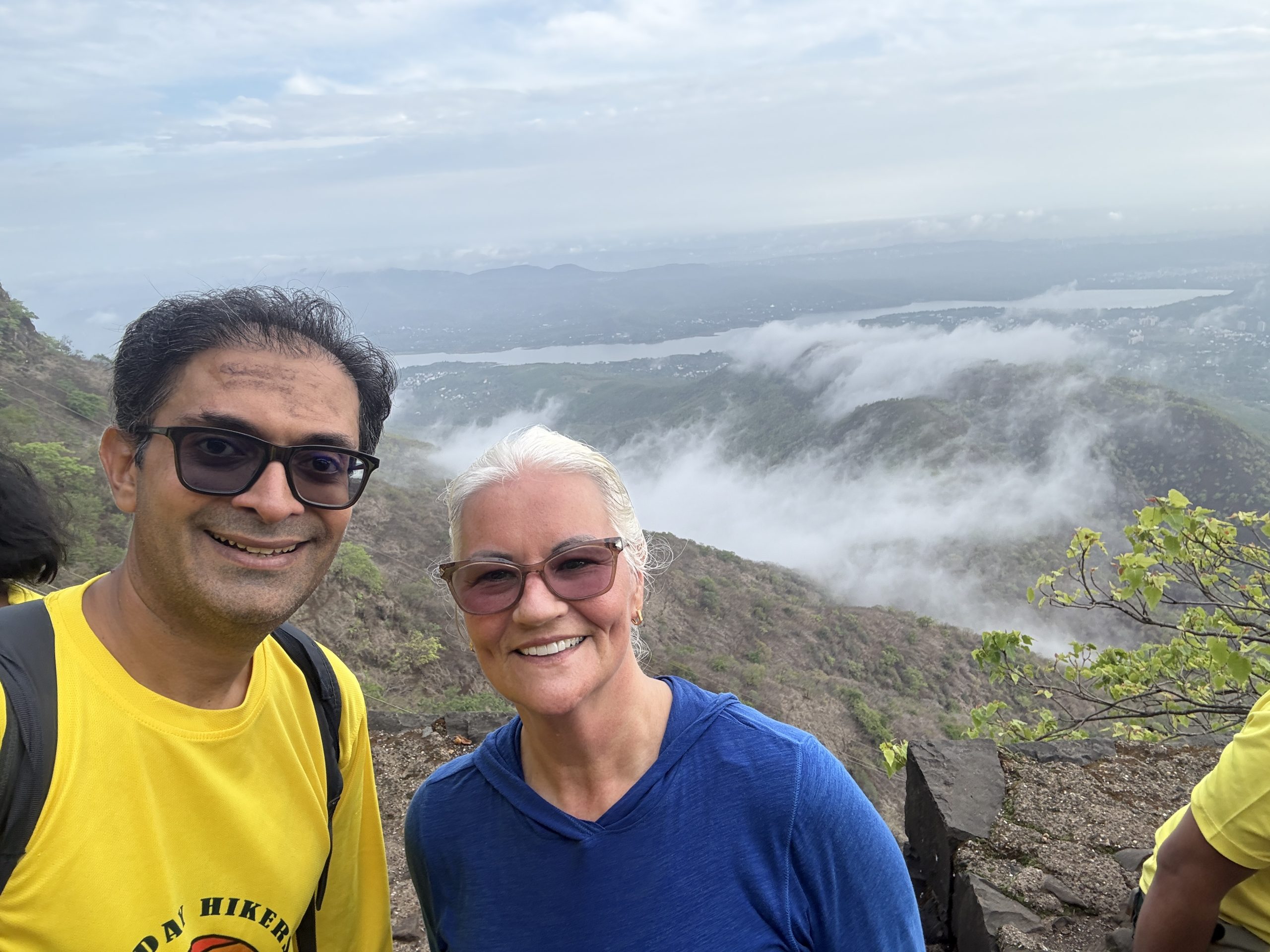
On Sunday I joined a local student and his group for a mountain hike to Sinhagad Fort. I thought I would have no problem because I hiked in the Alps last summer. But the Mont Blanc Trek offers ascent, descent, plateau, and rolling terrain. This hike was straight up and straight down, with no poles. My friend stayed with me, and I think we were the last ones in the group to reach the top. Someone asked him something, and I heard him say “62.” Then others on the trail stopped to clap for me. It was sweet—and a little embarrassing. Apparently, I am now the age where people cheer when I make it up a hill.
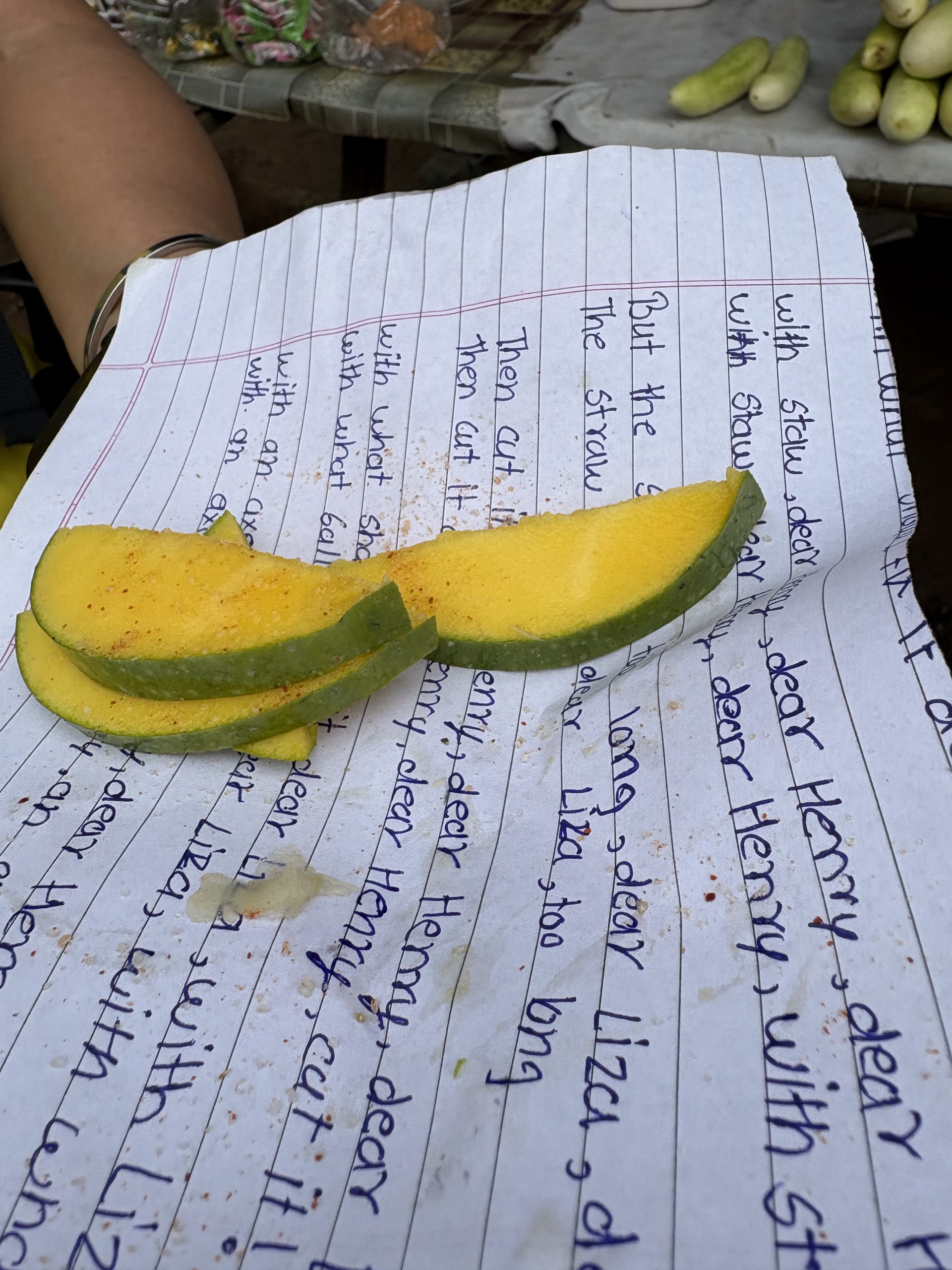
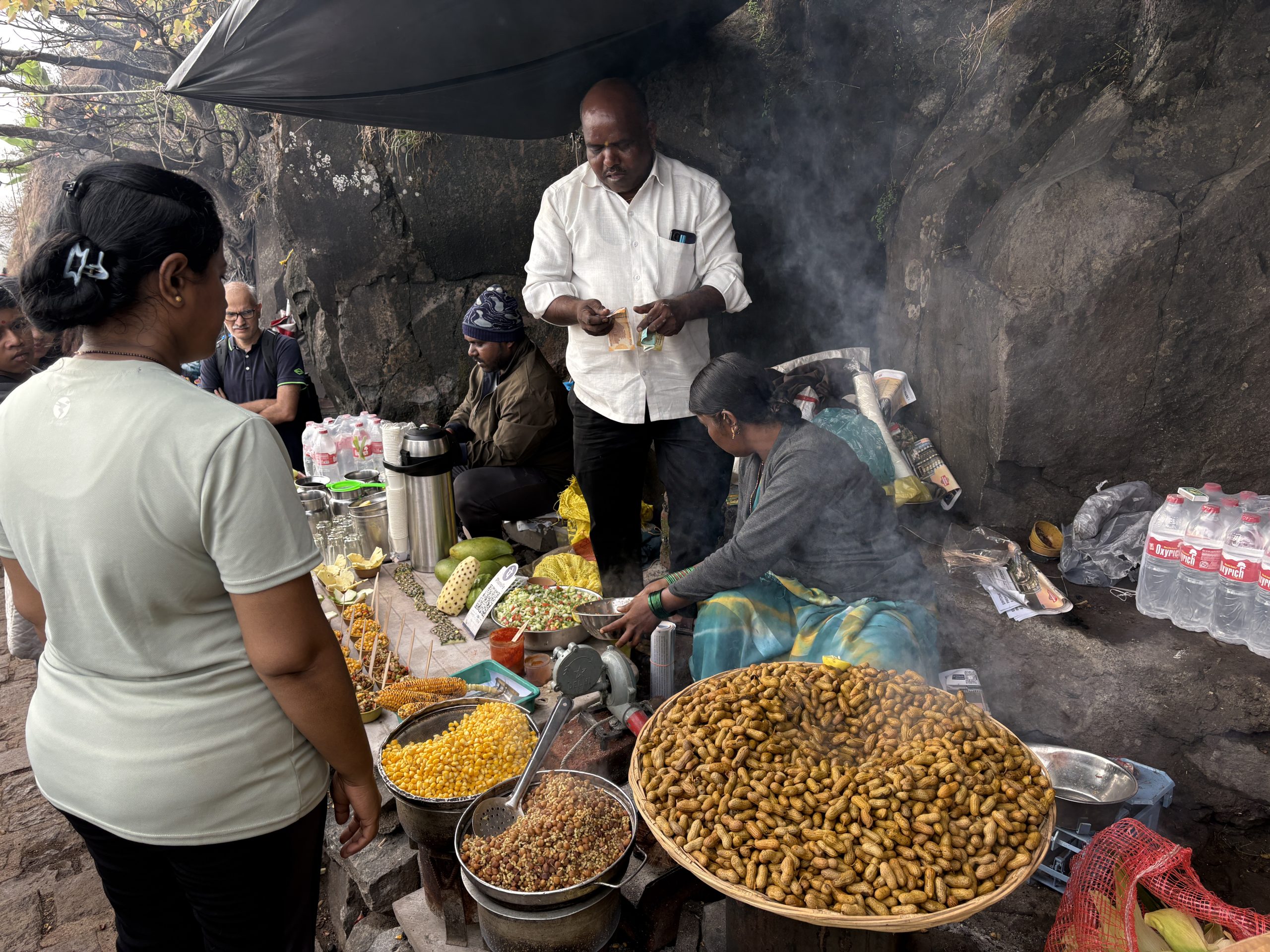
Near the fort, vendors sell snacks and drinks. I tried fresh green mango slices with chili and salt—you eat the peel—and they were delicious.
Week 4 Suggested Practice
This week’s practice is recuperative, with a focus on breath awareness and silent speech. In breath awareness, we observe the movement and sensations of the breath in the body during each asana. Classical yoga asks us to be clear about the region—or “confinement”—of breath study. In Sanskrit, this region is called deśa. It becomes an anchor for concentration and meditation. When the mind drifts, gently return to the chosen deśa.
Silent speech, or madhyama, is another yogic tool for training the mind. Because our karmic actions involve body, mind, and speech, we must also refine our speech to purify consciousness. We may not be able to control every random thought that arises, but we can become more skillful with the thoughts we choose to form. That is silent speech: our voluntary thinking.
When we keep the mind connected to a specific region in the body and engage in silent speech, we begin to discover one of yoga’s great powers: learning to steady the mind. Silent speech may be practiced with or without mantra. In prāṇāyāma, we learn that vowel sounds resonate with tiny energy channels in the body called nadis. This week, choose restorative asanas and use silent speech to keep the mind engaged rather than scattered. Become the commentator of your own practice. Quietly tell yourself what is happening, without judgment.
For example, once you settle into an asana, articulate what you observe. Choose a pose that does not require intense physical effort and allows you to settle in body, breath, and mind. Turn on your internal seer: feel, sense, and notice. Something in the body will usually speak first. In Adho Mukha Śvānāsana (Downward-facing Dog), you might notice the weight in your arms or tightness in the backs of your legs. Begin commentating: “I feel the backs of my knees and calves stretching and opening. There is tightness in my shoulder area.” As the pose settles, the sensations may change: “My abdomen is lengthening. The sides of my trunk are opening.” If you start to fatigue, sensitivity fades and the mind moves toward the fatigue. Come down and rest, then begin again. In the next round, you may be able to attend more closely to the sensation of the breath.
The point is to shift from doing to observing. Don’t get caught up in perfecting the physical asana, or you’ll miss the deeper practice. Yoga moves beyond the physical and physiological; it helps clean up and neutralize the mind. Through that inner observation, we begin to gain insight and wisdom.
Suggested Sequence
- Adho Mukha Vīrāsana (downward facing hero, aka Child’s Pose)
- Adho Mukha Śvānāsana (Downward-facing Dog)
- Prasārita Pādottānāsana (Intense standing stretch with spread legs)
- Śīrṣāsana (Head Balance)
- Pārśva Pavana Muktāsana with feet to the wall (Lie down with legs up the wall, then bend the knees toward the chest. Turn the bent legs to the right with feet pressing the wall and keep the trunk perpendicular to the wall. Spread the arms or take one arm over the head and use the other to press on the top knee.)
- Dvi Pada Viparīta Daṇḍāsana (2-legged Inverted Staff) on the chair, bed, or ottoman
- Sālamba Sarvāṅgāsana (or Chair Shoulder Stand or Setu Bandha)
- Paścimottānāsana sitting on height with a bolster under the bottom breast region
- Śavāsana (corpse pose)
Feel free to adapt the sequence to your needs. The point is not to perform more, but to observe more clearly.