


832-942-8240

Office : 1-5 pm Monday – Friday

Week 6 in Pune: Rain, Recovery, and the Road to Hanumanāsana

Pauline Schloesser, Ph.D., Certified Iyengar Yoga Teacher, IAYT Yoga Therapist

Hello dear students and friends,

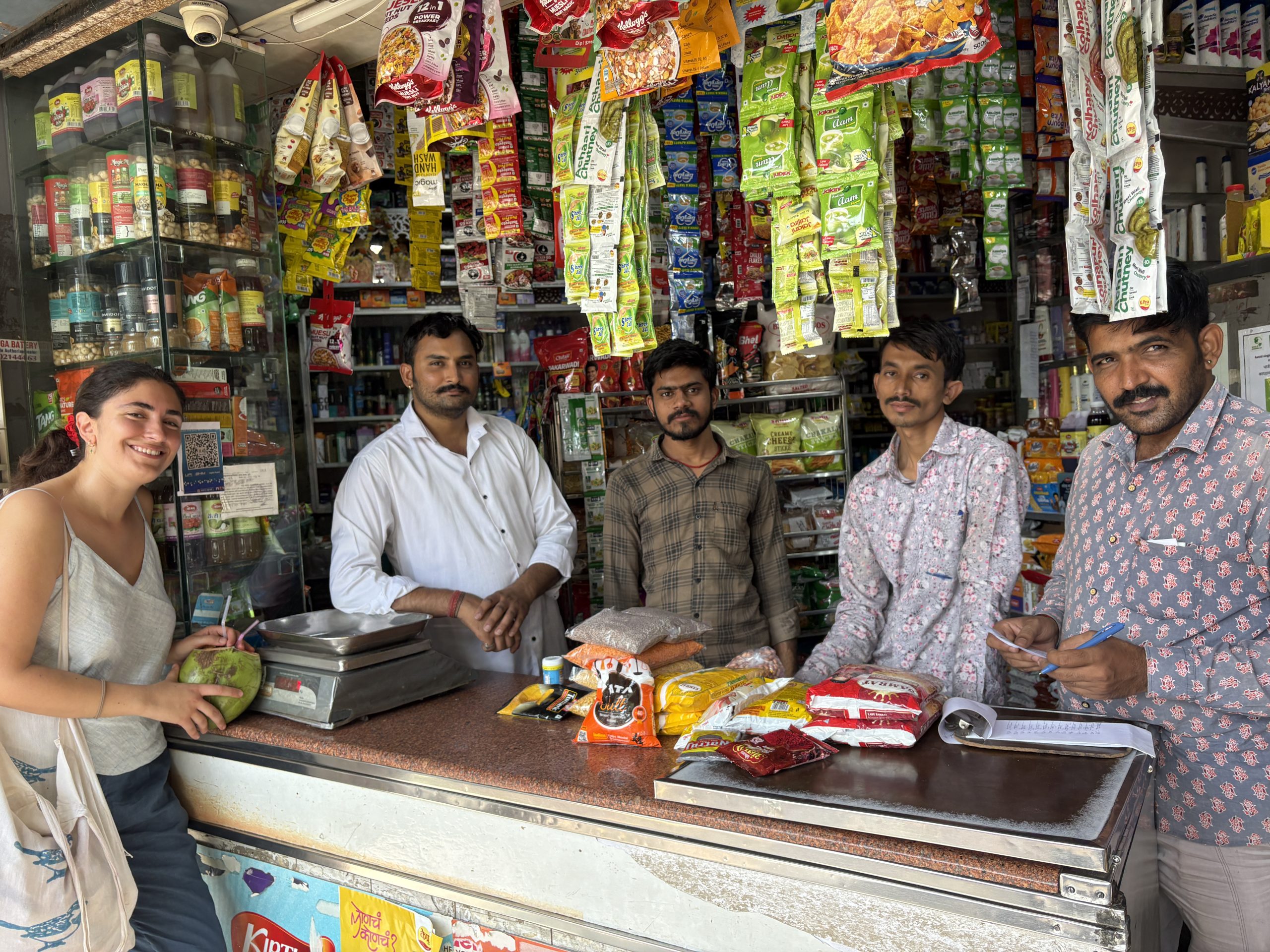
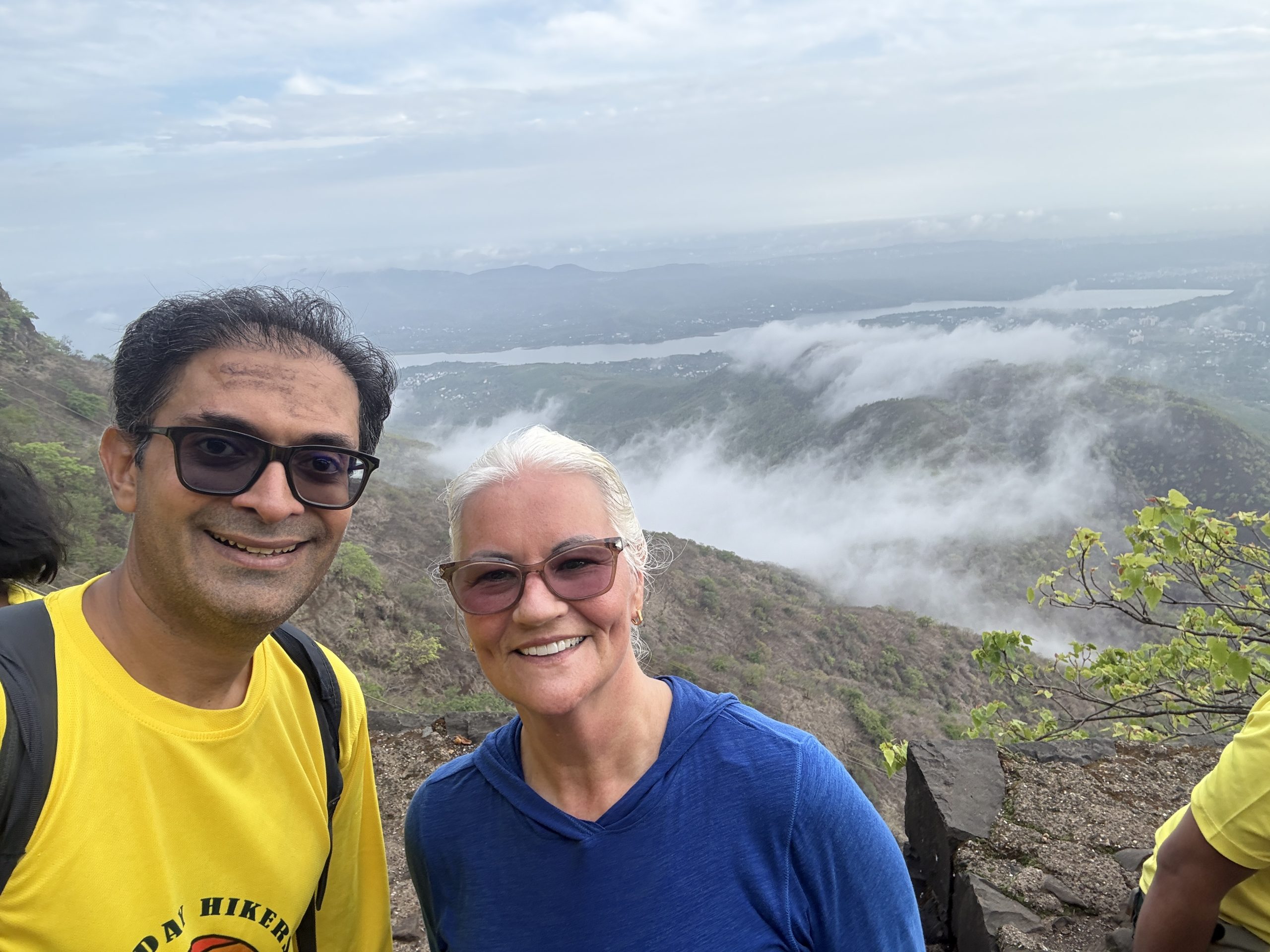
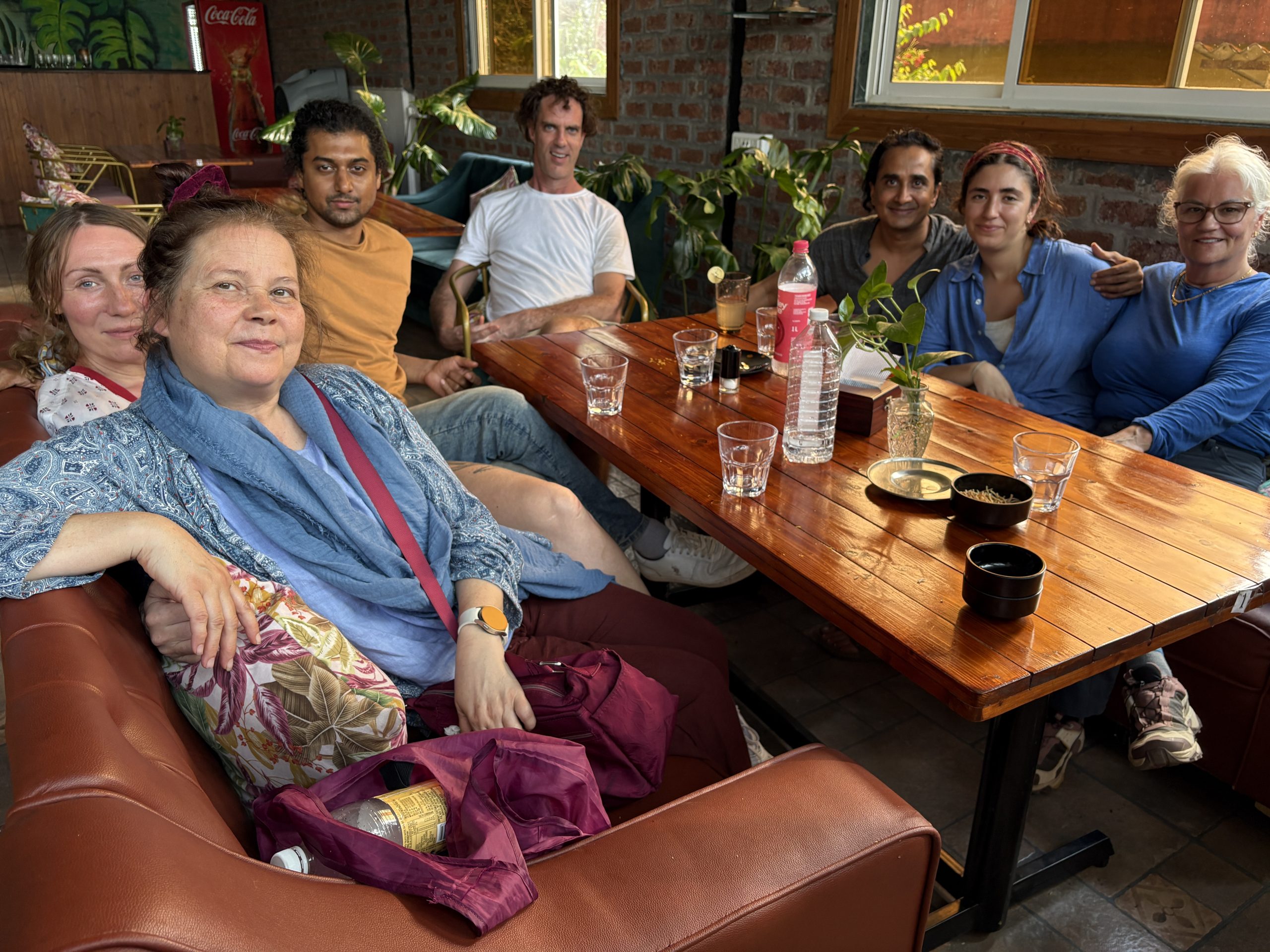
I’m nearly halfway through my stay here. Dan arrived on July 3, and after a few foggy days, he has finally adjusted to the time shift.

The rains were intense until midweek. The air was so humid that doors swelled and hanging laundry stayed perpetually damp. Now the sunshine has returned, and the stream next to our building—which had flooded beyond its banks—has settled back into its quiet, low flow.

Dan is in therapy classes on Mondays and Wednesdays, and we are learning new ways to work with his scoliosis. The therapy will likely not reverse his curvature, but it may slow its progression as he ages. Abhijata creates the sequence for him; she and the other senior teachers keep a close eye on him, while I try to place him in each asana as directed. Then, just when he is in the pose, I am often pulled over to another case. It’s not unusual for me to be “busted” by a supervising senior teacher and called back to Dan for a reckoning. The senior teacher will ask me a series of questions until, finally, they explain what I missed. Usually, it has to do with extension and straightening of the spine, and whether the flow of energy in the asana is right. I understand more each time, but I would need many years here to begin to approach the knowledge that RIMYI teachers have.

This week we practiced a special sequence to work toward Hanumanāsana. If you look at Guruji’s Hanumanāsana, you’ll see that it requires deep hamstring opening—think forward extensions—as well as backward extension. I’m sharing the sequence we were given because it skillfully incorporates both directions of movement. This is not a sequence to practice during menstruation or pregnancy, or when you are experiencing back pain. Have a look.
 

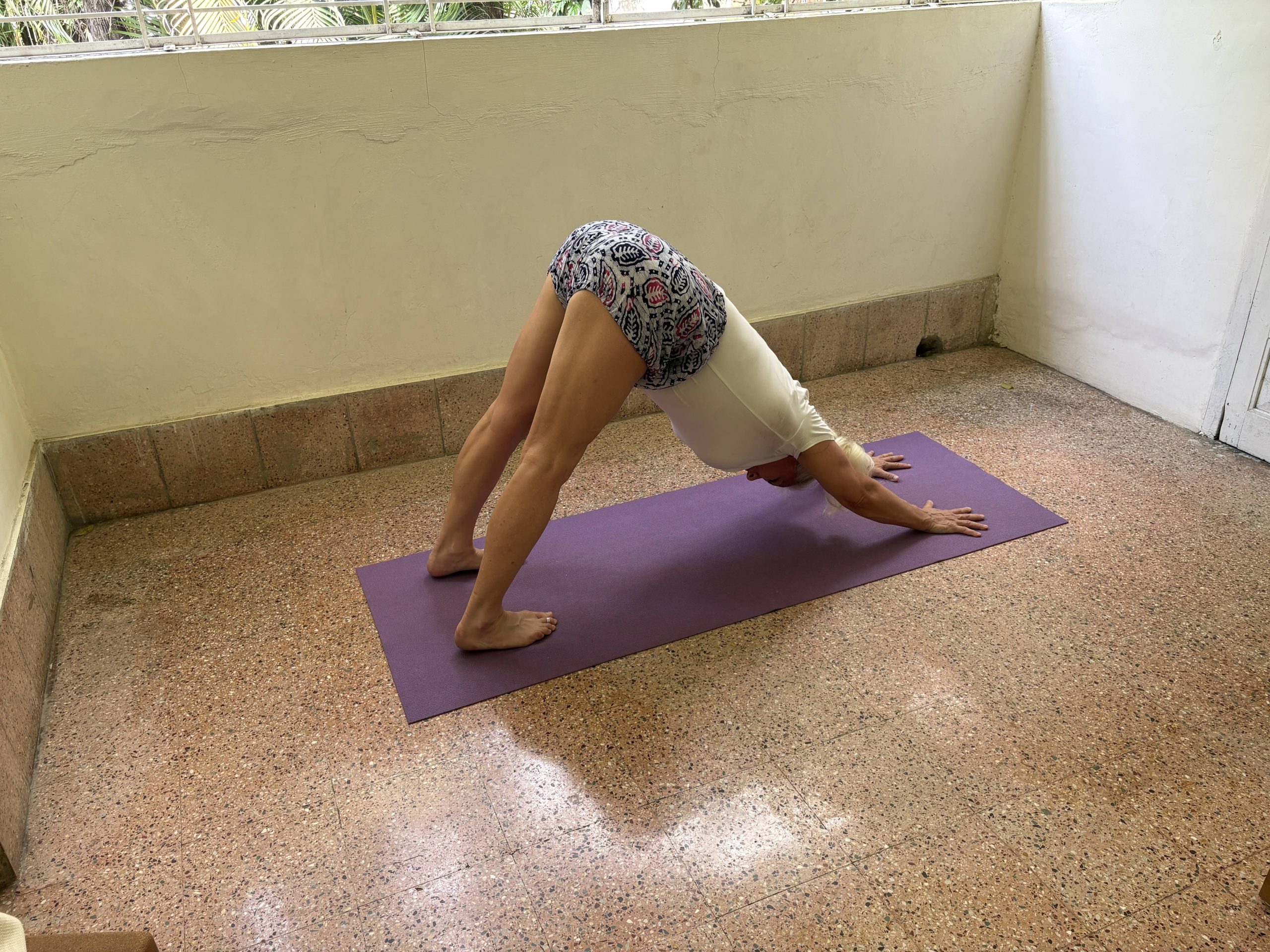
  1. Adho Mukha Śvānāsana—hold for one minute.
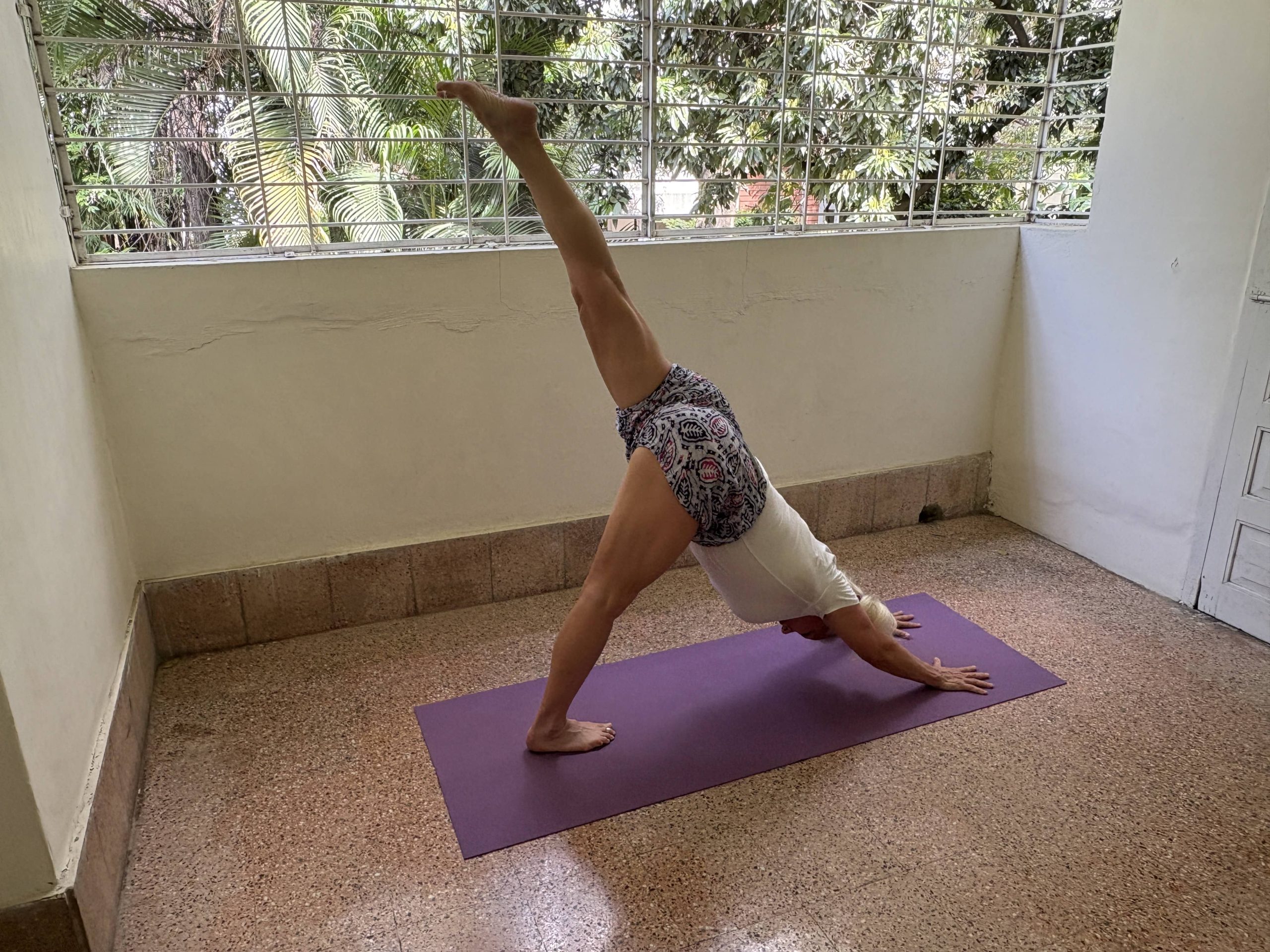
  2. Eka Pada Adho Mukha Śvānāsana (stand on the right leg and lift the left leg up).
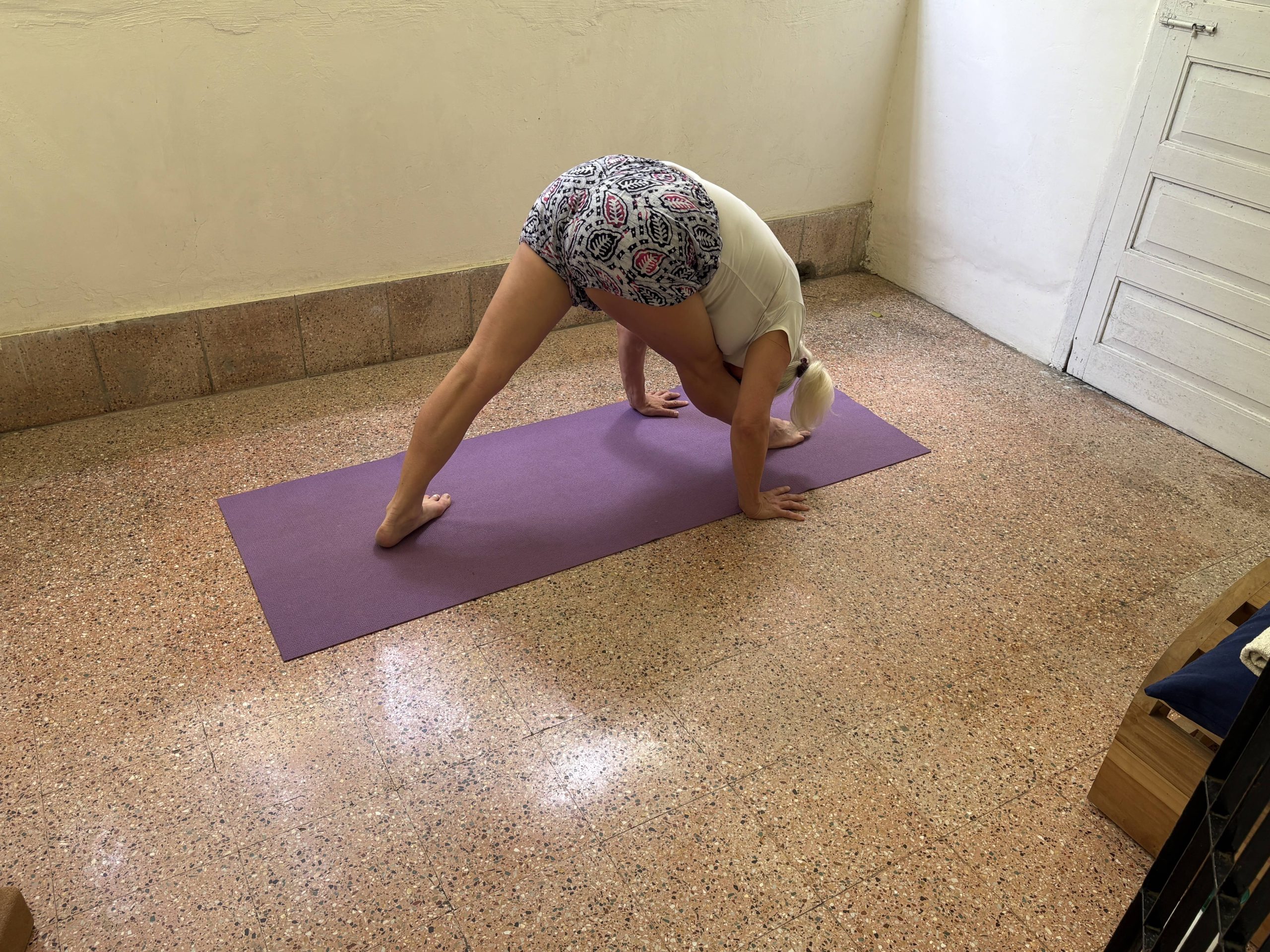
  3. Pārśvottānāsana (right leg forward). Hold for 30 seconds.
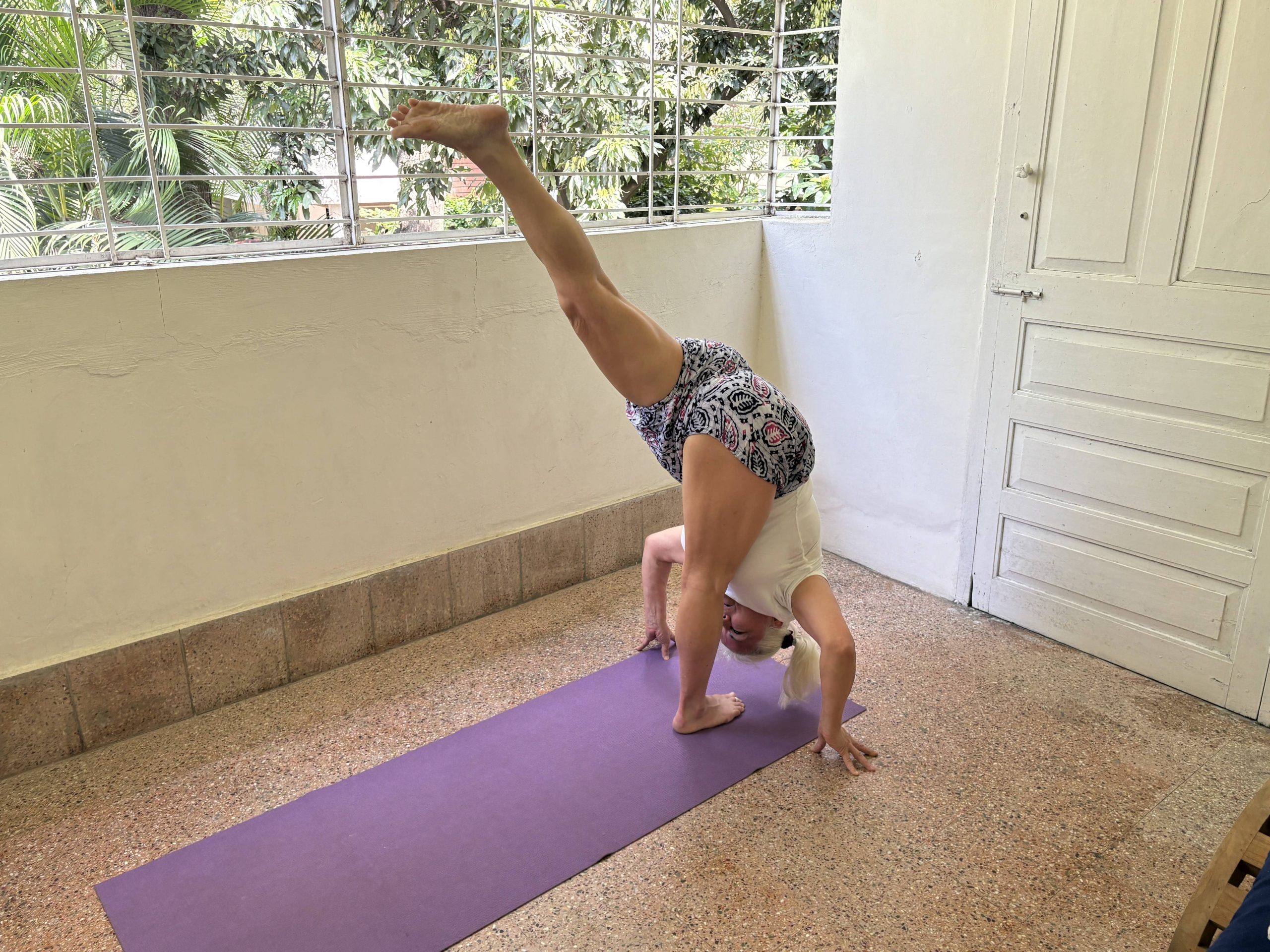
  4. Ūrdhva Prasārita Eka Pādāsana (standing on the right leg). Hold for 3 seconds and lift the back leg higher and higher.
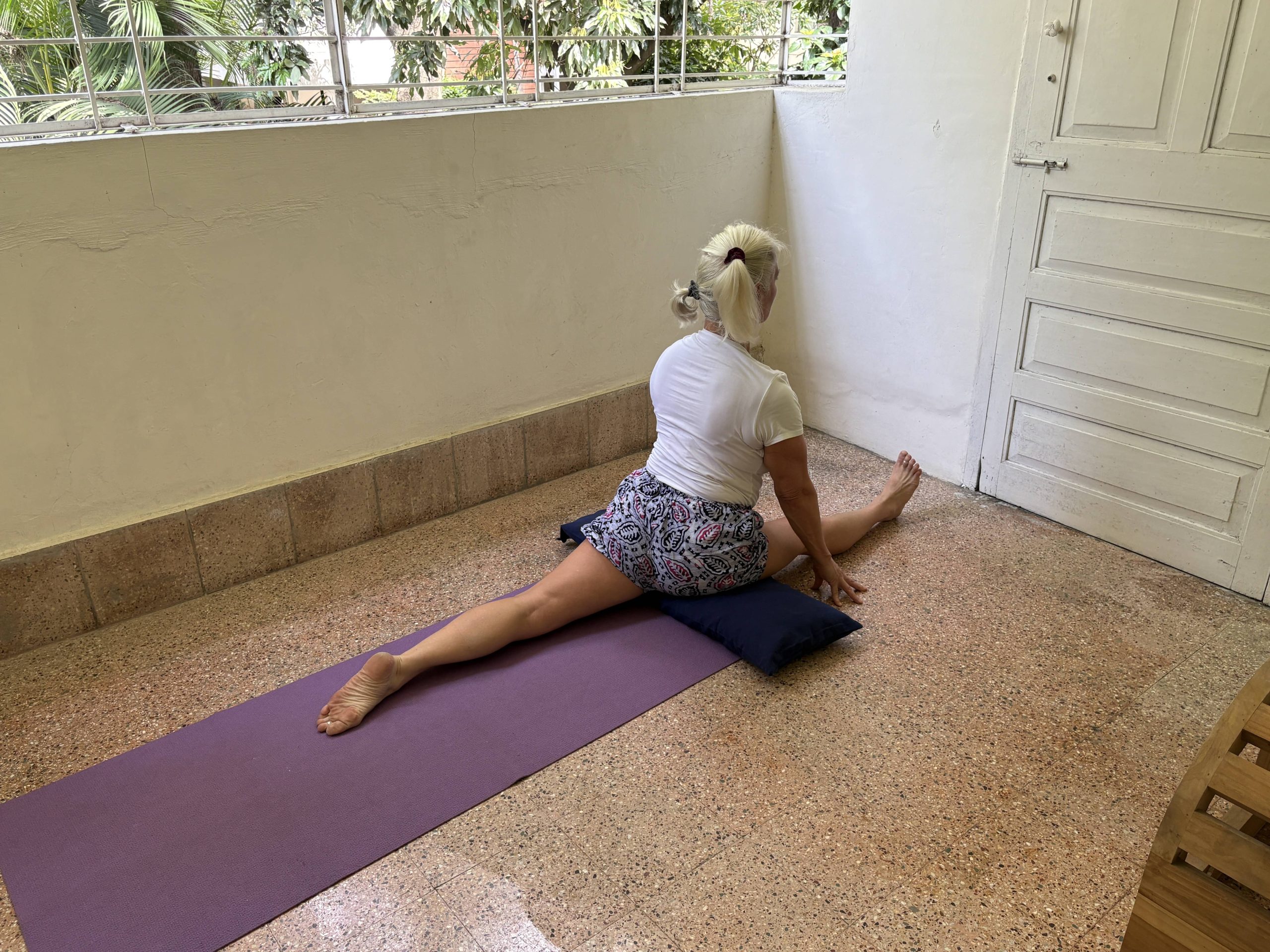
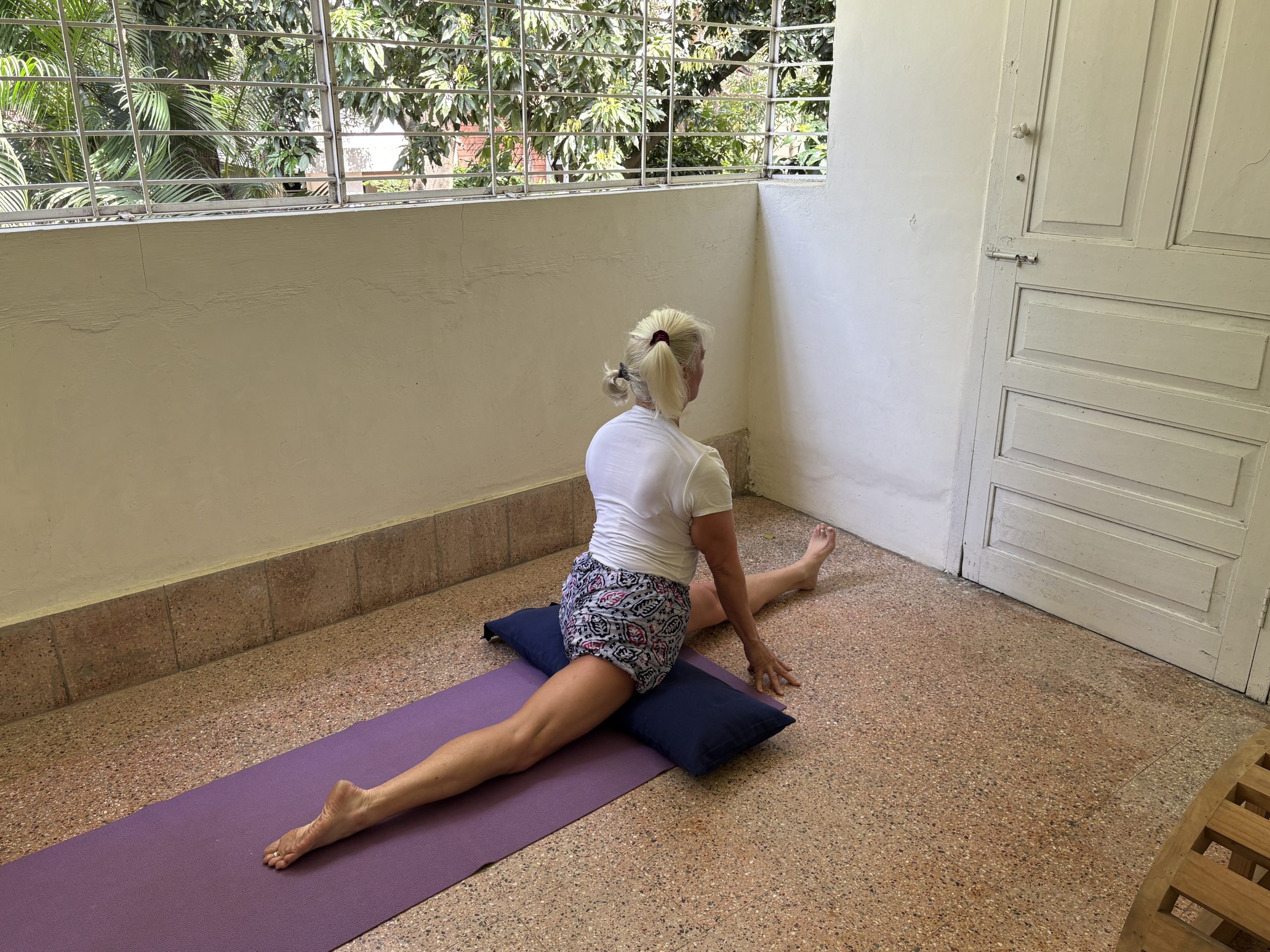
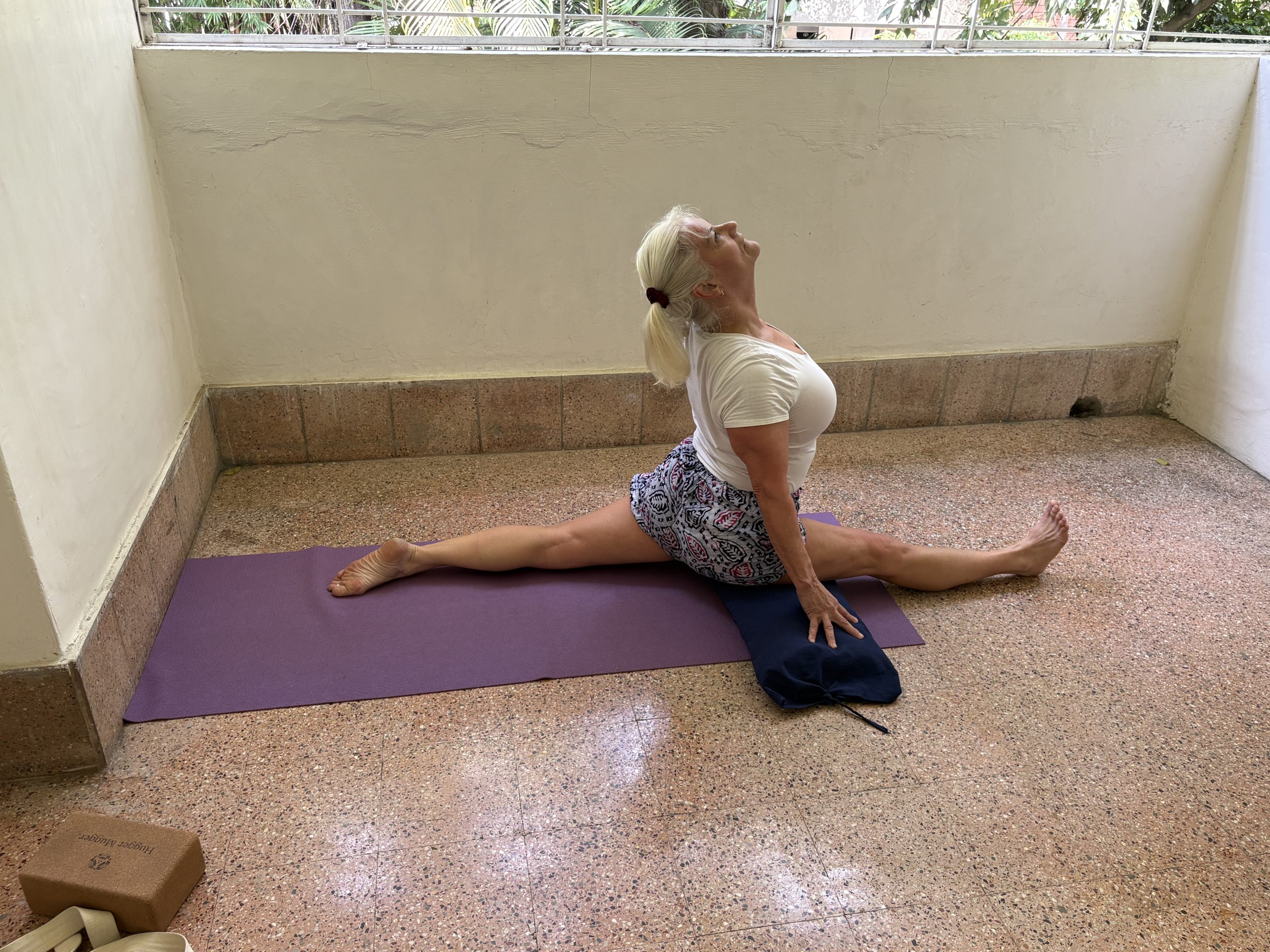
  5. Hanumanāsana, right leg forward. Use a bolster or two under the top thighs, according to your needs.
  6. Repeat 1–5 on the other side, with the left leg forward.

Second group:

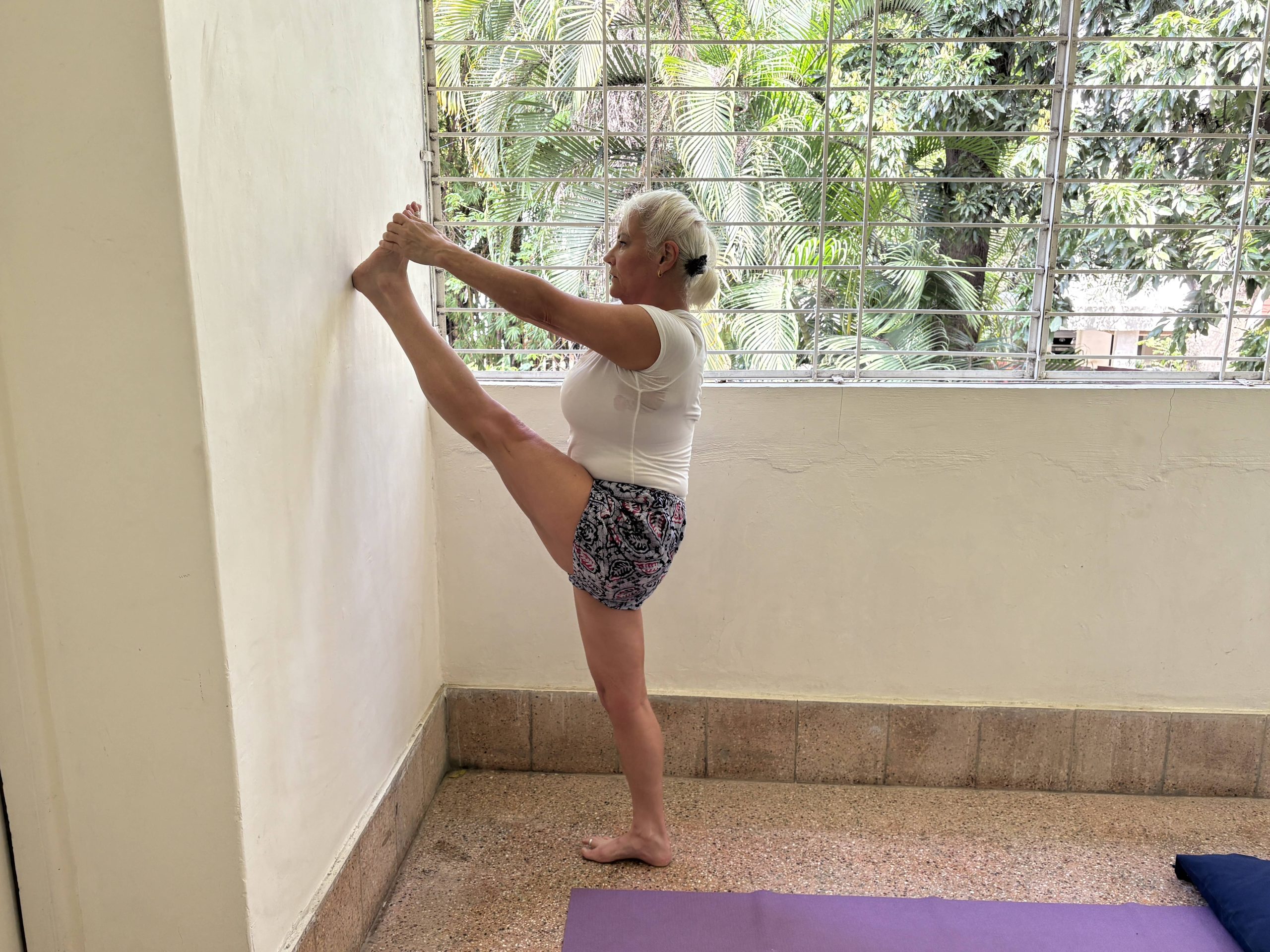
  1. Utthita Hasta Pādāṅguṣṭhāsana, right leg up the wall. Hold the foot. If you feel unstable, hold a rail or wall ropes, or place your back against the wall and use a strap to lift your leg. Make sure you are standing firmly on the left leg, and gradually move closer to the wall (or lift your leg higher) to open the legs further. Try to keep the bottom leg straight.
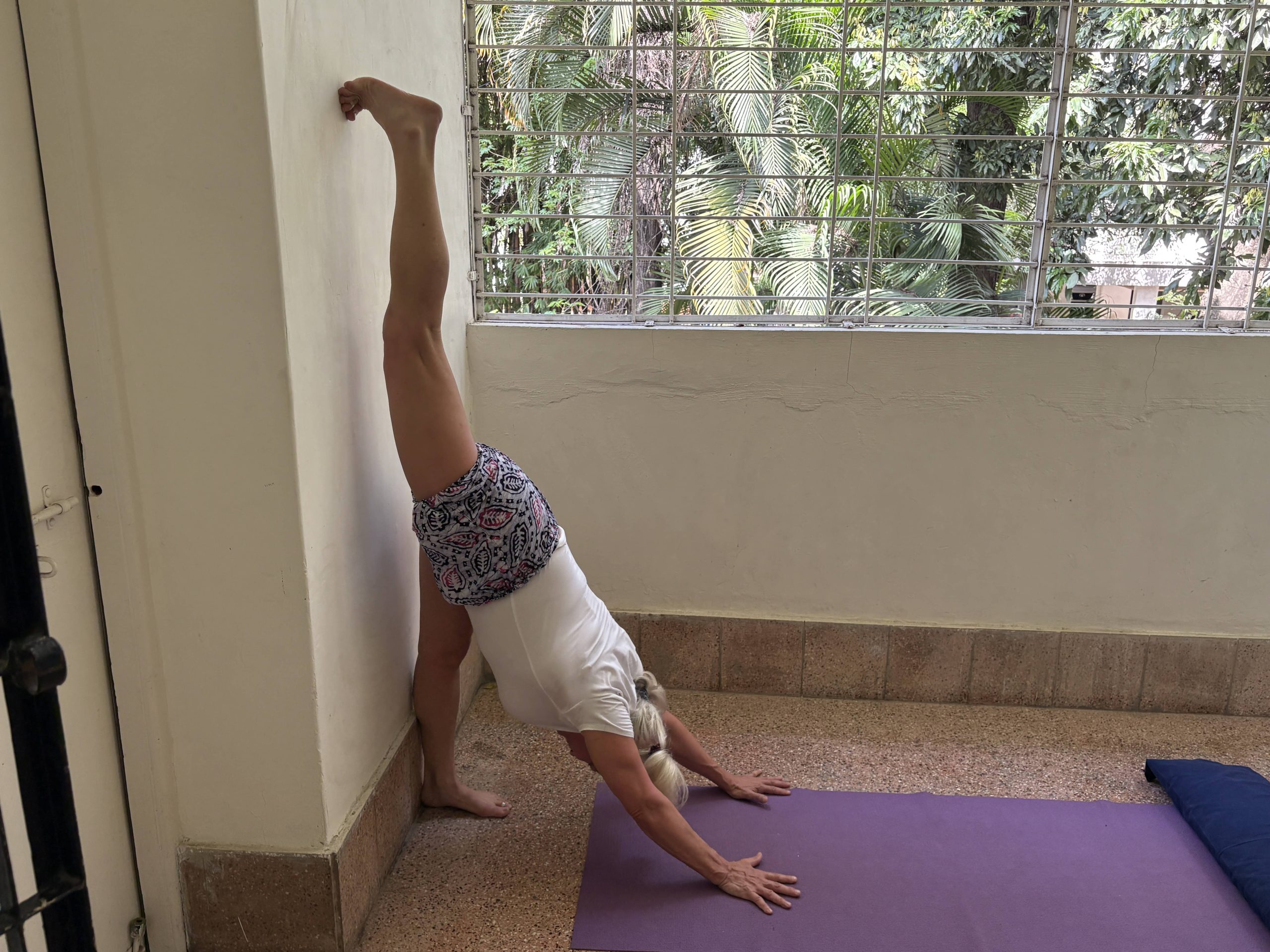
  2. Ūrdhva Prasārita Eka Pādāsana. Turn your back to the wall, stand on the right leg, and take the left leg up the wall. Press strongly through the arms and reach the back leg higher and higher. Gradually walk the hands closer to the wall and try to bring the bottom-leg thigh toward the wall. Notice that, once again, we are working with the right leg forward and the left leg back.
  3. Hanumanāsana. Continue to use whatever support you need under the legs and pelvis.
  4. Repeat 1–3 with the left leg forward and the right leg back or down.

Third group: approaching from backward extension

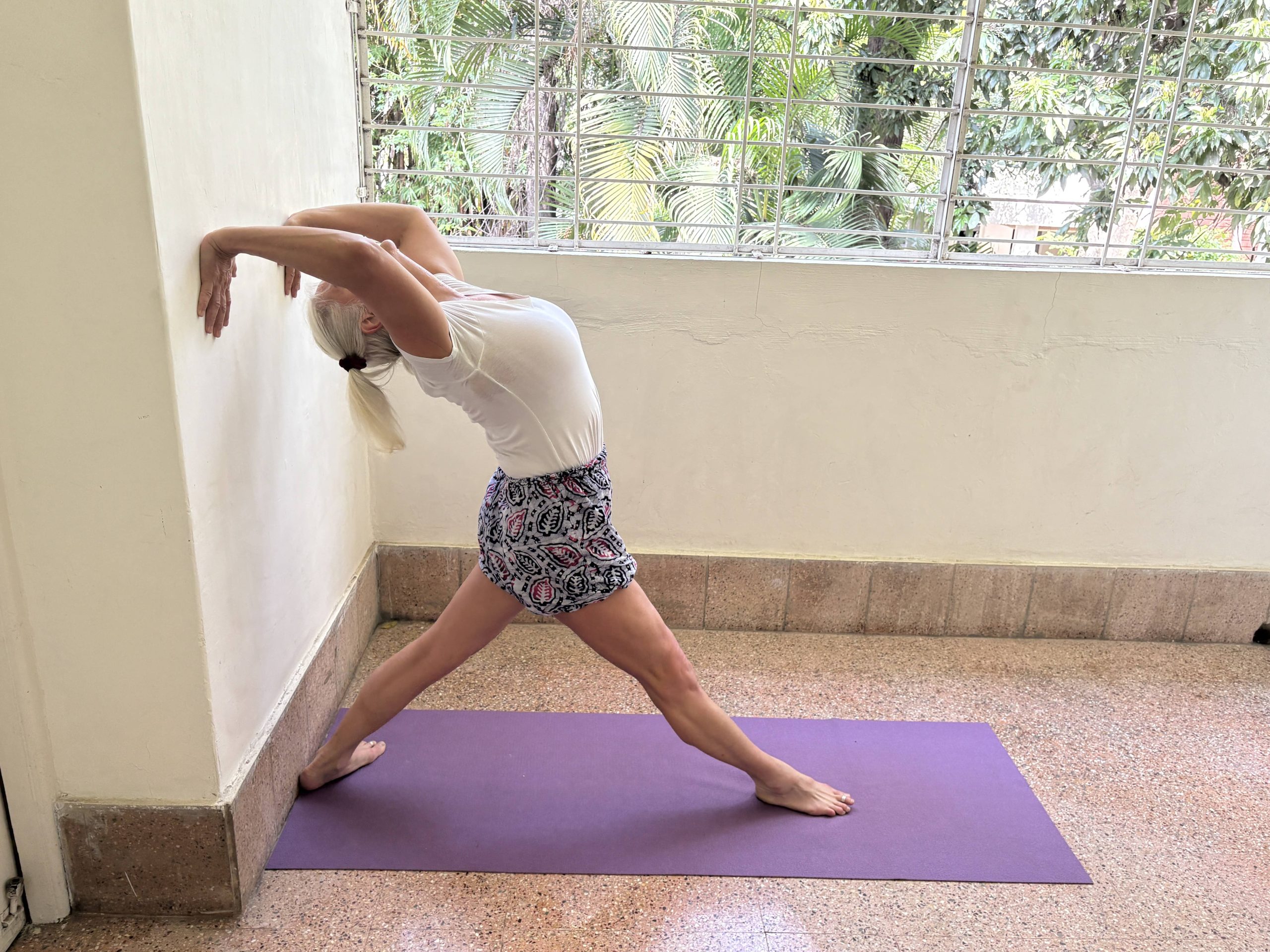
  1. Pārśvottānāsana with the left heel at the wall, right leg forward. Make sure you have at least 3 feet between your legs. Rotate the hips from left to right, and try to bring the left side of the pelvis even with the right so the pelvis faces forward. Place your hands on your hips, lift the chest, arch the spine, and look up. Then place your hands on the wall behind you and bend the elbows. Press the wall and lift the upper back strongly. This is very important. Stay for a few seconds.
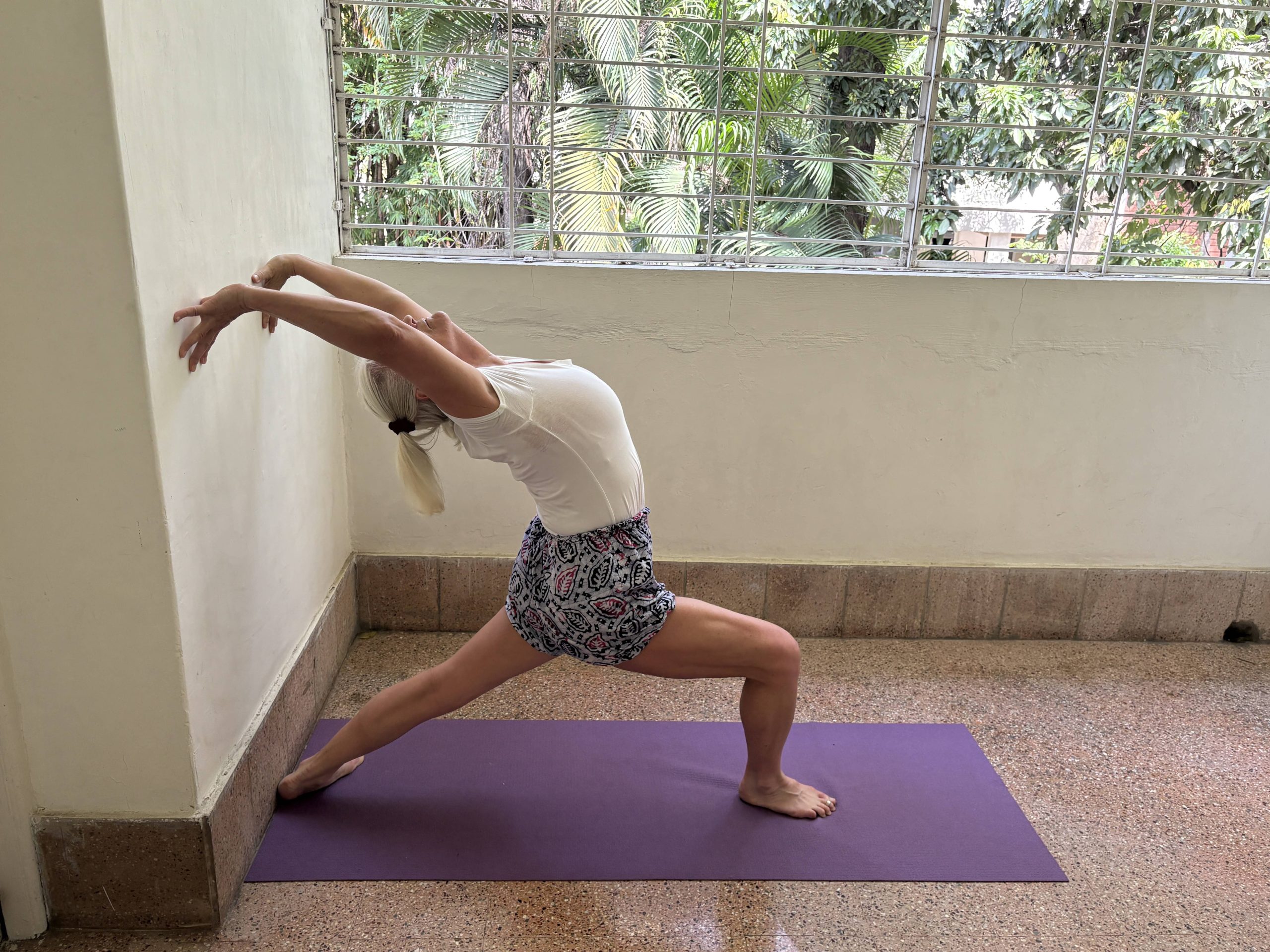
  2. Vīrabhadrāsana I. From Pārśvottānāsana, bend the front leg and try to straighten the arms. Again, lift the back ribs well and keep the back leg straight as you bring the front leg toward a square shape.
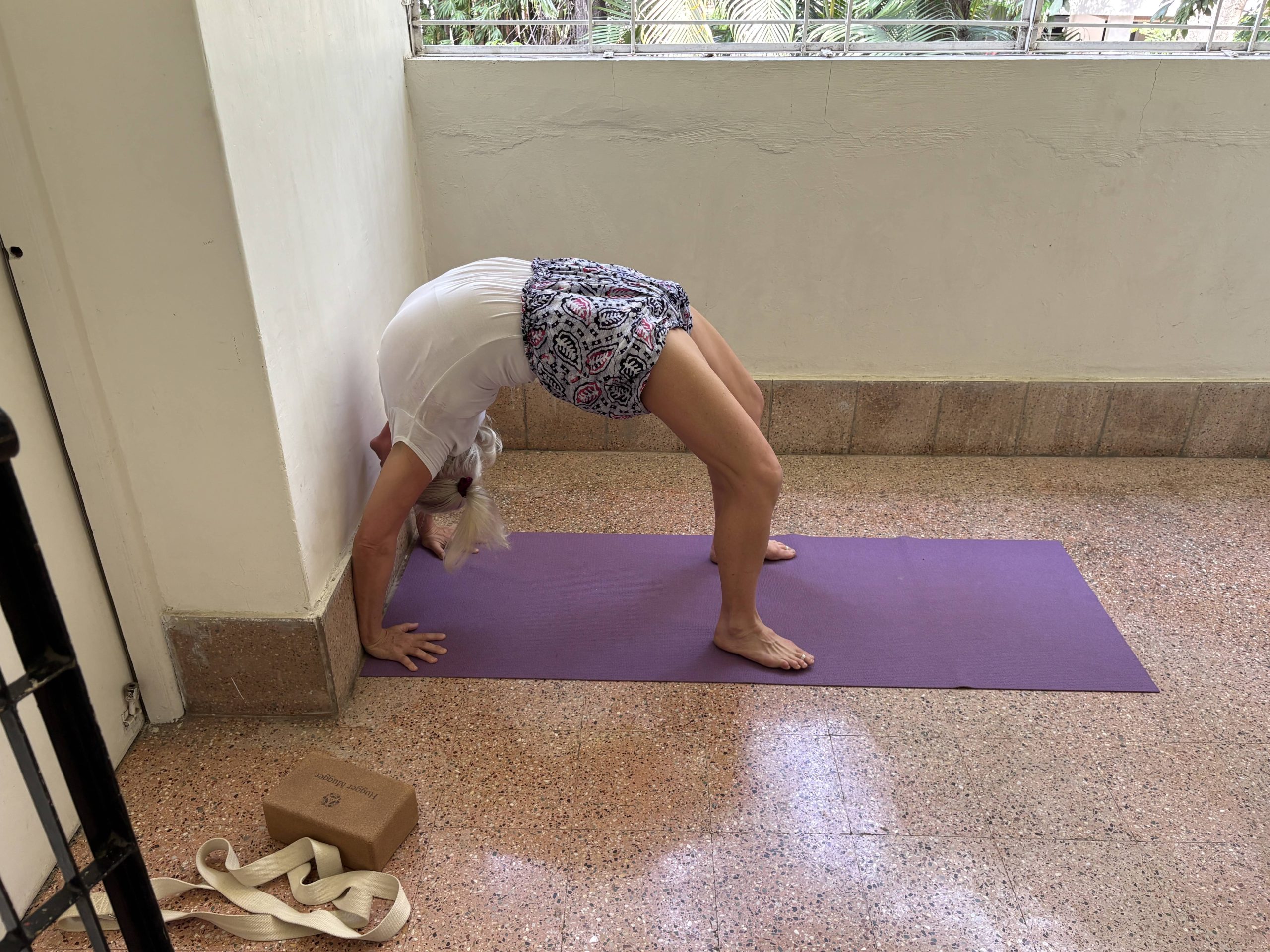
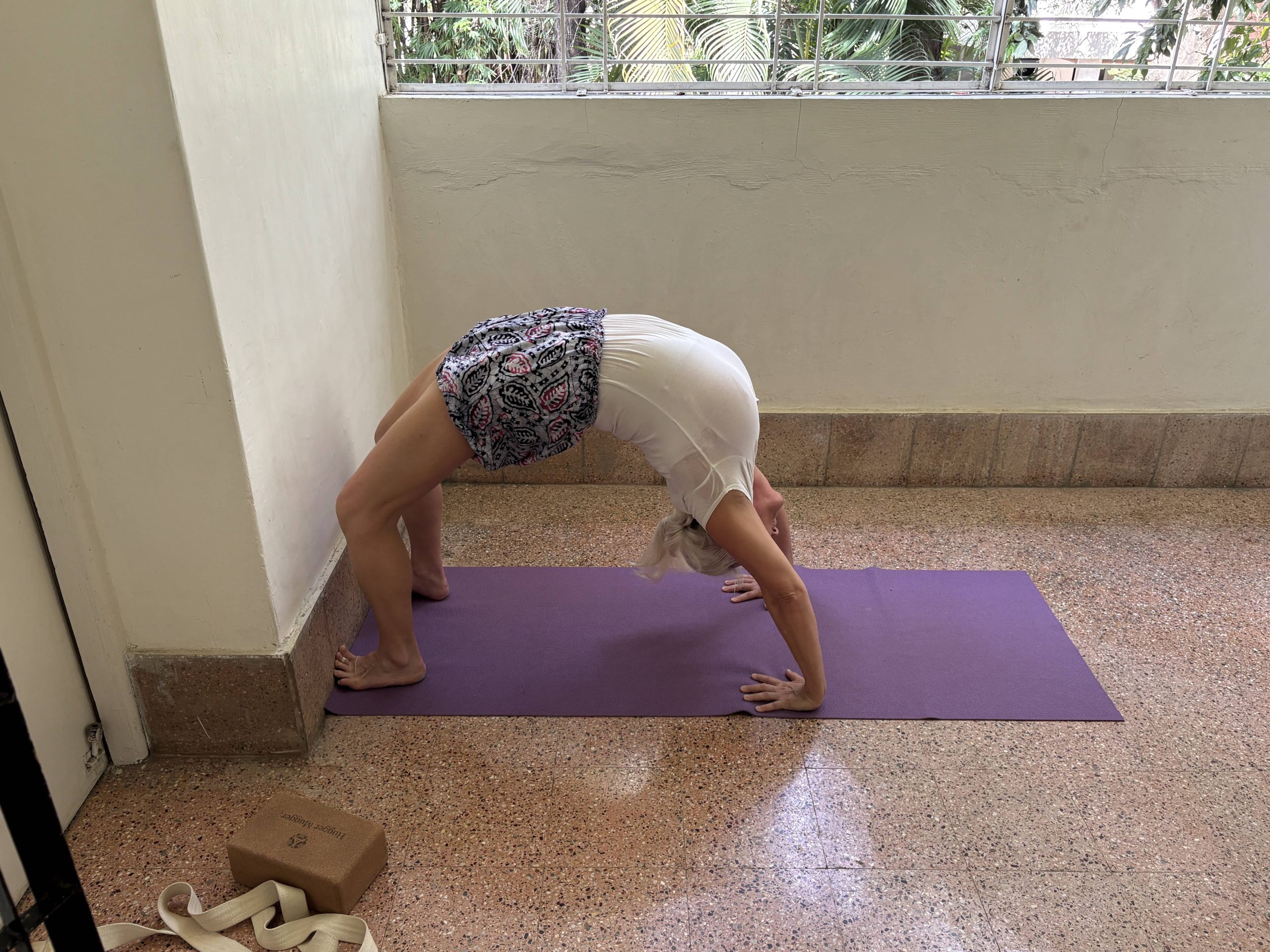
  3. Ūrdhva Dhanurāsana. Place the hands at the wall and go up. Use bricks under the hands, or whatever support you need. Then turn around, place the feet at the wall, and push up again.
  4. Hanumanāsana.
  5. Repeat 1–4 with the left leg forward and the right leg back.

Tip for the week: If you accept a perceived limitation and don’t push beyond it, you’ll never advance in an asana. Dan is taking one Intermediate class per week, and he learned this in Prasārita Pādottānāsana. The teacher asked what could be done if you can’t reach your head to the floor, and she was not impressed with someone’s answer: “get a block.” Instead, she taught students to take the hands farther forward, as in Downward-Facing Dog, and pulse to bring the trunk and head down. Once successful, walk the hands in an inch and pulse again.